CAS 29682-44-8
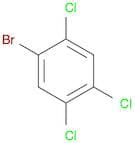
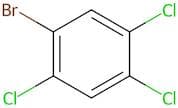
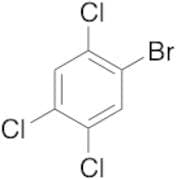
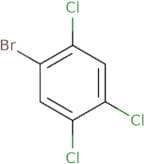
:1-Bromo-2,4,5-trichlorobenzene
Description:
1-Bromo-2,4,5-trichlorobenzene is an aromatic halogenated compound characterized by the presence of a bromine atom and three chlorine atoms attached to a benzene ring. This compound features a complex substitution pattern, with the bromine atom located at the first position and the chlorine atoms at the second, fourth, and fifth positions on the benzene ring. It is typically a colorless to pale yellow solid at room temperature and is known for its relatively low solubility in water, but it is soluble in organic solvents such as acetone and chloroform. The presence of multiple halogen substituents contributes to its chemical stability and potential reactivity, making it of interest in various chemical applications, including as an intermediate in organic synthesis and in the study of environmental persistence. Additionally, due to its halogenated nature, it may exhibit toxicity and environmental concerns, necessitating careful handling and disposal.
Formula:C6H2BrCl3
InChI:InChI=1S/C6H2BrCl3/c7-3-1-5(9)6(10)2-4(3)8/h1-2H
InChI key:InChIKey=PHDKZIIWDGIUCG-UHFFFAOYSA-N
SMILES:BrC1=C(Cl)C=C(Cl)C(Cl)=C1
Synonyms:- Benzene, 1-bromo-2,4,5-trichloro-
- 1-Bromo-2,4,5-trichlorobenzene
- Bromo-2,4,5-trichlorobenzene
- 2,4,5-Trichlorobromobenzene
Sort by
Purity (%)
0
100
|
0
|
50
|
90
|
95
|
100
Found 5 products.
Benzene, 1-bromo-2,4,5-trichloro-
CAS:Formula:C6H2BrCl3Purity:97%Color and Shape:SolidMolecular weight:260.34311-Bromo-2,4,5-trichlorobenzene
CAS:1-Bromo-2,4,5-trichlorobenzenePurity:98%Molecular weight:260.34g/mol1-Bromo-2,4,5-trichlorobenzene
CAS:Formula:C6H2BrCl3Purity:95%Color and Shape:SolidMolecular weight:260.341-Bromo-2,4,5-trichlorobenzene
CAS:Controlled ProductFormula:C6H2BrCl3Color and Shape:NeatMolecular weight:260.341-Bromo-2,4,5-trichlorobenzene
CAS:1,2,4-Trichlorobenzene is a chlorinated aromatic hydrocarbon that has been shown to act as a neurotoxin. It is homologous to dibenzodioxins and stereoselectively reacts with dopamine in the rat brain. This reaction produces polyphosphoric acid, which may be involved in the etiology of Parkinson's disease. 1-Bromo-2,4,5-trichlorobenzene can also act as a neuroleptic and produces an increase in chloride ions in the rat brain. The mechanism of this effect is not well understood, but it may be due to its ability to catalyze the conversion of hydrogen chloride to chlorine. 1-Bromo-2,4,5-trichlorobenzene also binds copper ions at a high rate and depletes them from the body.Formula:C6H2BrCl3Purity:Min. 95%Molecular weight:260.35 g/mol