CAS 29894-36-8
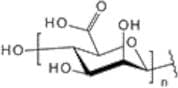
:Poly(mannuronic acid)
Description:
Poly(mannuronic acid) is a biopolymer derived from the polysaccharide alginate, which is primarily found in brown seaweeds. It is composed of repeating units of mannuronic acid, a uronic acid that contributes to the polymer's structural and functional properties. This substance is characterized by its gel-forming ability, which is influenced by the presence of divalent cations such as calcium ions. Poly(mannuronic acid) exhibits biocompatibility and biodegradability, making it suitable for various biomedical applications, including drug delivery systems, tissue engineering, and wound healing. Its hydrophilic nature allows it to absorb water and swell, forming hydrogels that can encapsulate therapeutic agents. Additionally, poly(mannuronic acid) can be chemically modified to enhance its properties or to introduce specific functionalities. The polymer's ability to interact with biological molecules also makes it a subject of interest in the development of biosensors and other bioactive materials. Overall, poly(mannuronic acid) is a versatile compound with significant potential in both industrial and medical fields.
Formula:(C6H10O7)x
InChI:InChI=1/C6H10O7/c7-1-2(8)3(9)4(10)5(11)6(12)13/h1-5,8-11H,(H,12,13)/t2-,3-,4+,5+/s2
InChI key:InChIKey=IAJILQKETJEXLJ-TZQRYKPXNA-N
SMILES:[C@H]([C@@H]([C@@H](C=O)O)O)([C@@H](C(O)=O)O)O
Synonyms:- Mannuronic acid, polymers
- Mannuronic acid, homopolymer
- Poly(mannuronic acid)
Sort by
Purity (%)
0
100
|
0
|
50
|
90
|
95
|
100
Found 2 products.
Polymannuronic acid sodium salt - Average MW > 5000 Da
CAS:Sodium polymannuronate is produced from alginates by partial hydrolysis and chromatography of brown algae such as Laminaria digitata, Ascophyllum nodosum and Fucus spp. The image was kindly provided by Prof Mike Guiry from Cork who runs ‘The Seaweed Site’.Purity:Min. 85%Color and Shape:PowderPolymannuronic acid sodium salt - Average MW < 5000 Da
CAS:Polymannuronic acid is produced from alginates by partial hydrolysis and chromatography of brown algae such as Laminaria digitata, Ascophyllum nodosum and Fucus spp. The image was kindly provided by Prof Mike Guiry from Cork who runs ‘The Seaweed Site’.Color and Shape:Powder