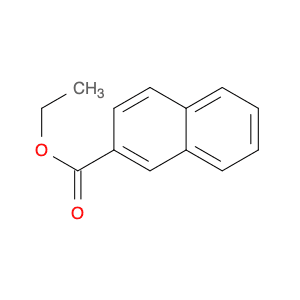
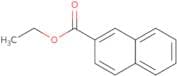
CAS 3007-91-8
:2-Naphthalenecarboxylic acid, ethyl ester
Description:
2-Naphthalenecarboxylic acid, ethyl ester, also known as ethyl 2-naphthoate, is an organic compound characterized by its naphthalene ring structure substituted with a carboxylic acid group and an ethyl ester. This compound typically appears as a colorless to pale yellow liquid with a characteristic aromatic odor. It is moderately soluble in organic solvents such as ethanol and ether but has limited solubility in water due to its hydrophobic naphthalene core. The compound is known for its applications in organic synthesis, particularly in the production of various pharmaceuticals and fragrances. It exhibits properties typical of esters, including reactivity in transesterification and hydrolysis reactions. Additionally, 2-naphthalenecarboxylic acid, ethyl ester may show biological activity, making it of interest in medicinal chemistry. Safety data indicates that it should be handled with care, as it may cause irritation to the skin and eyes. Proper storage in a cool, dry place away from light is recommended to maintain its stability.
Formula:C13H12O2
InChI:InChI=1S/C13H12O2/c1-2-15-13(14)12-8-7-10-5-3-4-6-11(10)9-12/h3-9H,2H2,1H3
InChI key:InChIKey=HQKSINSCHCDMLS-UHFFFAOYSA-N
SMILES:C(OCC)(=O)C1=CC2=C(C=C1)C=CC=C2
Synonyms:- 2-Naphthalenecarboxylic acid, ethyl ester
- 2-Naphthoic acid, ethyl ester
- Ethyl 2-naphthalenecarboxylate
- Ethyl Naphthalene-2-Carboxylate
- Ethyl b-naphthoate
- NSC 171216
- Ethyl 2-naphthoate
Sort by
Purity (%)
0
100
|
0
|
50
|
90
|
95
|
100
Found 6 products.
Ethyl 2-naphthoate
CAS:Ethyl 2-naphthoate is an agent of biochemical.Formula:C13H12O2Purity:98%Color and Shape:SolidMolecular weight:200.23β-Naphthoic acid ethyl ester
CAS:β-Naphthoic acid ethyl ester (BNAE) is a synthetic compound that has been used as an intermediate in the synthesis of organic compounds. It is also used to prepare hydroxamic acids, which are active methylene compounds. BNAE reacts with nucleophiles and is susceptible to nucleophilic attack. The reaction mechanism for this type of compound involves a cavity with a constant volume, which increases the reactivity of the molecule. This type of reaction can be explained using the functional theory and the use of organic solvents. BNAE is stable when exposed to carbon tetrachloride and hydroxamic acids, but not when exposed to diethyl succinate or chemical agents such as sodium nitrite.Formula:C13H12O2Purity:Min. 95%Color and Shape:PowderMolecular weight:200.23 g/mol