CAS 3019-74-7
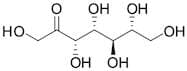
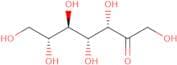
:D-Sedoheptulose
Description:
D-Sedoheptulose is a seven-carbon sugar, specifically a ketose, that plays a significant role in various biological processes, particularly in the context of photosynthesis and carbohydrate metabolism. It is a rare sugar that can be found in certain plants and is involved in the pentose phosphate pathway, which is crucial for cellular metabolism and the generation of reducing power in the form of NADPH. D-Sedoheptulose exists in both open-chain and cyclic forms, with the cyclic form being more prevalent in solution. Its structure features a ketone functional group, which distinguishes it from aldoses. The substance is typically white to off-white in appearance and is soluble in water, making it accessible for various biochemical applications. D-Sedoheptulose has garnered interest in research due to its potential implications in metabolic studies and its role in the regulation of sugar metabolism. As with many sugars, it is important to handle it with care in laboratory settings, considering its reactivity and potential for fermentation by certain microorganisms.
Formula:C7H14O7
InChI:InChI=1S/C7H14O7/c8-1-3(10)5(12)7(14)6(13)4(11)2-9/h3,5-10,12-14H,1-2H2/t3-,5-,6-,7-/m1/s1
InChI key:InChIKey=HSNZZMHEPUFJNZ-SHUUEZRQSA-N
SMILES:[C@@H]([C@@H]([C@@H](CO)O)O)([C@@H](C(CO)=O)O)O
Synonyms:- <span class="text-smallcaps">D</span>-Altroheptulose
- <span class="text-smallcaps">D</span>-Sedoheptulose
- <span class="text-smallcaps">D</span>-altro-2-Heptulose
- <span class="text-smallcaps">D</span>-altro-Heptulose
- D-altro-hept-2-ulose
- Sedoheptulose
- beta-D-altro-hept-2-ulopyranose
- D-Sedoheptulose
- D-altro-Heptulose
- D-Altroheptulose
- D-altro-2-Heptulose
Sort by
Purity (%)
0
100
|
0
|
50
|
90
|
95
|
100
Found 3 products.
(3S,4R,5R,6R)-1,3,4,5,6,7-Hexahydroxyheptan-2-one (>90%)
CAS:Controlled ProductFormula:C7H14O7Purity:>90%Color and Shape:NeatMolecular weight:210.182D-Sedoheptulose
CAS:D-Sedoheptulose is a sugar that is a member of the pentoses. It has been shown to have a ph optimum of 4.5 and oxidizing potential of -0.18 V. It is also an important intermediate in carbohydrate metabolism and can be used as an energy source by cells. D-Sedoheptulose plays a role in transcriptional regulation and cellular physiology, as well as being involved in the production of acyl chains and disulfide bonds for proteins. D-Sedoheptulose has also been found to have synergic effects with other sugars such as glucose, sucrose, or fructose, which may be due to its ability to act as an inducer of reductive enzymes such as glucose-6-phosphate dehydrogenase (G6PD).
Formula:C7H14O7Purity:Min. 95%Color and Shape:PowderMolecular weight:210.18 g/mol