CAS 302-41-0
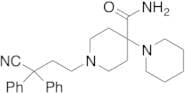
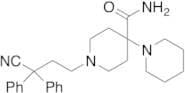
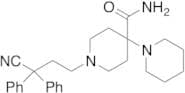
:Piritramide
- 1'-(3-Cyano-3,3-Diphenylpropyl)-1,4'-Bipiperidine-4'-Carboxamide
- 1-(3,3-Diphenyl-3-cyanopropyl)-4-piperidino-4-piperidinecarboxamide
- 1-(3-Cyano-3,3-Diphenylpropyl)-4-Piperidinopiperidine-4-Carboxamide
- 2,2-Diphenyl-4-(4-piperidino-4-carbamoylpiperidino)butyronitrile
- 2,2-Diphenyl-4-[4-(1-piperidino)-4-carbamoyl-1-piperidino]butyronitrile
- Dipidolor
- Dipiritramide
- Pirdolan
- Piridolan
- Pirinitramide
- R 3365
- See more synonyms
Piritramide
CAS:Controlled ProductApplications It is a synthetic opioid commonly used in Germany and Austria for the analgesia of pediatric patients. Analgesic (narcotic).Controlled substance (opiate).
References Anand, K., et al.: J. Pediatr. Surg., 23, 297 (1988), Breitfeld, C., et al.: Br. J. Anaesth., 91, 218 (2003), Bouillon, T., et al.: Eur. J. Anaesthesiol., 21, 673 (2004),Formula:C27H34N4OColor and Shape:NeatMolecular weight:430.59Piritramide (1 mg/mL in Methanol)
CAS:Controlled ProductFormula:C27H34N4OColor and Shape:Single SolutionMolecular weight:430.59Piritramide (1 mg/ml in Acetonitrile)
CAS:Controlled ProductFormula:C27H34N4OColor and Shape:Single SolutionMolecular weight:430.59Piritramide
CAS:Controlled ProductPiritramide is a nonsteroidal anti-inflammatory drug that is used to treat pain and inflammation in a variety of conditions. It has been shown to inhibit the production of gamma-aminobutyric acid in receptor cells, which may be responsible for its depressant effect on the central nervous system. Piritramide also inhibits blood clotting and can increase blood flow to the site of injury or infection. The drug is effective at relieving pain and inflammation due to abdominal surgery and carcinoma cell lines. Piritramide is metabolized by esterases in the liver into trifluoroacetic acid, which then circulates throughout the body. This drug also binds to serum proteins such as albumin, leading to an increased half-life time.
Formula:C27H34N4OPurity:Min. 95%Molecular weight:430.59 g/mol