CAS 302904-82-1
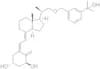
:Atocalcitol
Description:
Atocalcitol, also known as 1α,25-dihydroxyvitamin D3 or a synthetic analog of calcitriol, is a compound that exhibits properties similar to those of vitamin D. It is primarily recognized for its role in regulating calcium and phosphate metabolism in the body, promoting bone health and influencing various cellular processes. Atocalcitol functions by binding to the vitamin D receptor, thereby modulating gene expression related to calcium absorption and bone mineralization. This compound is often studied for its potential therapeutic applications in conditions such as osteoporosis and certain skin disorders, including psoriasis. Its pharmacological profile includes anti-inflammatory and immunomodulatory effects, making it a subject of interest in dermatological research. Atocalcitol is typically administered topically or systemically, depending on the intended use, and its safety and efficacy are evaluated through clinical studies. As with any pharmacological agent, understanding its mechanism of action, dosage, and potential side effects is crucial for effective therapeutic application.
Formula:C32H46O4
InChI:InChI=1/C32H46O4/c1-21(19-36-20-23-8-6-10-26(16-23)31(3,4)35)28-13-14-29-24(9-7-15-32(28,29)5)11-12-25-17-27(33)18-30(34)22(25)2/h6,8,10-12,16,21,27-30,33-35H,2,7,9,13-15,17-20H2,1,3-5H3/b24-11+,25-12-/t21-,27+,28+,29-,30-,32+/m0/s1
Synonyms:- (1S,3R,5Z,7E,20R)-20-(3-(2-Hydroxypropan-2-yl)benzyloxymethyl)-9,10-secopregna-5,7,10(19)-triene-1alpha,3beta-diol
- (1R,3S,5Z)-5-[(2E)-2-{(1R,3aS,7aR)-1-[(1R)-2-{[3-(1-hydroxy-1-methylethyl)benzyl]oxy}-1-methylethyl]-7a-methyloctahydro-4H-inden-4-ylidene}ethylidene]-4-methylidenecyclohexane-1,3-diol (non-preferred name)
Sort by
Purity (%)
0
100
|
0
|
50
|
90
|
95
|
100
Found 2 products.
Atocalcitol
CAS:Atocalcitol is a vitamin D analog. It also acts as an agonist of alcitriol receptor.Formula:C32H46O4Purity:98%Color and Shape:SolidMolecular weight:494.71Atocalcitol
CAS:Atocalcitol is a synthetic analogue of vitamin D3. It is a ligand for the nuclear receptor that has been shown to inhibit the activity of the calcium-sensing receptor (CaSR) in vitro. It also inhibits the binding of calcitriol to its receptor, and is able to activate some ion channels.Formula:C32H46O4Purity:Min. 95%Molecular weight:494.7 g/mol