CAS 3034-54-6
:2-Iodothiazole
Description:
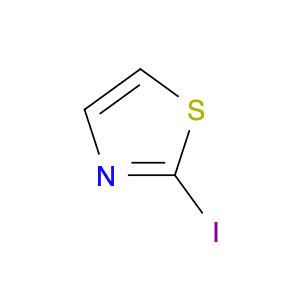
2-Iodothiazole is a heterocyclic organic compound characterized by the presence of both iodine and a thiazole ring in its structure. The thiazole ring consists of a five-membered ring containing both sulfur and nitrogen atoms, which contributes to its unique chemical properties. This compound is typically a pale yellow to brown solid and is known for its reactivity due to the presence of the iodine atom, which can participate in various substitution reactions. 2-Iodothiazole is often utilized in organic synthesis and can serve as an intermediate in the production of pharmaceuticals, agrochemicals, and other fine chemicals. Its molecular structure allows for diverse applications, particularly in the development of biologically active compounds. Additionally, the presence of the iodine atom can enhance the compound's lipophilicity, potentially influencing its biological activity and interaction with other molecules. As with many halogenated compounds, safety precautions should be taken when handling 2-iodothiazole due to its potential toxicity and environmental impact.
Formula:C3H2INS
InChI:InChI=1S/C3H2INS/c4-3-5-1-2-6-3/h1-2H
InChI key:InChIKey=VAQSRTGFMKWNIH-UHFFFAOYSA-N
SMILES:IC1=NC=CS1
Synonyms:- 2-Iodothiazole
- Thiazole, 2-Iodo-
- 2-Iodo-1,3-thiazole
Sort by
Purity (%)
0
100
|
0
|
50
|
90
|
95
|
100
Found 4 products.
2-Iodothiazole
CAS:2-Iodothiazole is a molecule that contains two iodine atoms. It is an isomeric compound of thiourea and 2-thiazolidine. The nucleophilic attack by the amide group on the magnesium leads to the formation of a magnesium amide complex, which can be hydrolyzed to get valine. This reaction can also be catalyzed by palladium complexes or vitamin B1, which results in one molecule of 2-iodothiazole being produced for each molecule of magnesium amide complex. The halides and diazonium salt are used as oxidizing agents in this reaction. 2-Iodothiazole can be synthesized from primary amines and iodides or halides. 2-Iodothiazole has been shown to inhibit bacterial growth by inhibiting RNA synthesis (ribosome binding) in bacteria such as Mycobacterium tuberculosis and Mycobacterium avium complex, but not inFormula:C3H2INSPurity:Min. 95%Color and Shape:Yellow PowderMolecular weight:211.03 g/mol