CAS 3041-17-6
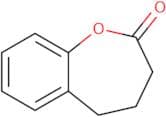
:1-Benzoxepin-2(3H)-one, 4,5-dihydro-
Description:
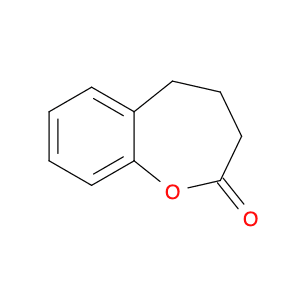
1-Benzoxepin-2(3H)-one, 4,5-dihydro- is a chemical compound characterized by its bicyclic structure, which includes a benzene ring fused to a 1,3-oxepin moiety. This compound features a carbonyl group (ketone) at the 2-position of the oxepin ring, contributing to its reactivity and potential applications in organic synthesis. The presence of the dihydro group indicates that the compound has two additional hydrogen atoms, which can influence its stability and reactivity compared to fully unsaturated analogs. It is typically a white to off-white solid and may exhibit moderate solubility in organic solvents. The compound is of interest in medicinal chemistry and materials science due to its unique structural properties, which can lead to diverse biological activities and potential uses in pharmaceuticals. As with many organic compounds, handling should be done with care, considering safety protocols to avoid exposure.
Formula:C10H10O2
Sort by
Purity (%)
0
100
|
0
|
50
|
90
|
95
|
100
Found 4 products.
1-Benzoxepin-2(3H)-one, 4,5-dihydro-
CAS:Formula:C10H10O2Purity:95%Color and Shape:LiquidMolecular weight:162.18524,5-Dihydrobenzo[b]oxepin-2(3H)-one
CAS:4,5-Dihydrobenzo[b]oxepin-2(3H)-onePurity:95%Molecular weight:162.19g/mol4,5-dihydro-3H-1-benzoxepin-2-one
CAS:4,5-Dihydro-3H-1-benzoxepin-2-one is a peroxide that is an intermediate in the synthesis of cyclohexanones. It can be obtained by treatment with trifluoroacetic acid or immobilized catalysts. The yields are between 60 and 70%. A cyclohexanone can be synthesized from 4,5-dihydro-3H-1-benzoxepin-2-one by epoxidation with polyphosphoric acid. This reaction also produces a carboxylic acid as a byproduct. The use of lipase as catalyst leads to production of higher yields of cyclohexanones and carboxylic acids.Formula:C10H10O2Purity:Min. 95%Molecular weight:162.18 g/mol

![4,5-Dihydrobenzo[b]oxepin-2(3H)-one](/_next/image/?url=https%3A%2Fstatic.cymitquimica.com%2Fproducts%2F54%2Fthumb%2FOR1072020.jpg&w=3840&q=75)

![4,5-Dihydrobenzo[b]oxepin-2(3H)-one](/_next/image/?url=https%3A%2Fstatic.cymitquimica.com%2Fproducts%2F10%2Fthumb%2FF690423.jpg&w=3840&q=75)