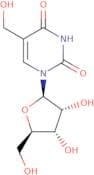
CAS 30414-00-7
:5-(Hydroxymethyl)uridine
Description:
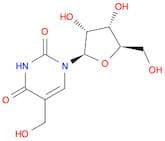
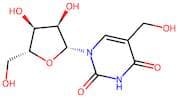
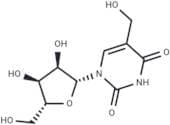
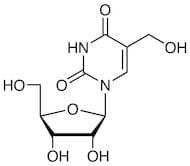
5-(Hydroxymethyl)uridine is a nucleoside analog of uridine, characterized by the presence of a hydroxymethyl group at the 5-position of the uracil base. This modification can influence its biological activity and interactions with nucleic acids. The compound is typically a white to off-white crystalline solid, soluble in water and polar organic solvents, which facilitates its use in biochemical applications. It is often studied for its potential roles in RNA metabolism and as a building block in the synthesis of modified nucleotides. The presence of the hydroxymethyl group may enhance its stability and alter its binding affinity to various enzymes and receptors. Additionally, 5-(Hydroxymethyl)uridine has been investigated for its potential therapeutic applications, particularly in the context of antiviral and anticancer research. As with many nucleoside analogs, its biological effects are closely related to its ability to mimic natural nucleosides, which can lead to interference with nucleic acid synthesis and function.
Formula:C10H14N2O7
InChI:InChI=1/C10H14N2O7/c13-2-4-1-12(10(18)11-8(4)17)9-7(16)6(15)5(3-14)19-9/h1,5-7,9,13-16H,2-3H2,(H,11,17,18)/t5-,6-,7-,9-/m1/s1
SMILES:c1c(CO)c(nc(=O)n1[C@H]1[C@@H]([C@@H]([C@@H](CO)O1)O)O)O
Synonyms:- Uridine, 5-(Hydroxymethyl)-
Sort by
Purity (%)
0
100
|
0
|
50
|
90
|
95
|
100
Found 6 products.
Uridine, 5-(hydroxymethyl)-
CAS:Formula:C10H14N2O7Purity:98%Color and Shape:SolidMolecular weight:274.22745-Hydroxymethyl uridine
CAS:5-Hydroxymethyl uridine is a modified nucleoside, a crucial molecule in biochemical and molecular biological research for RNA and DNA.Formula:C10H14N2O7Color and Shape:SolidMolecular weight:274.235-(Hydroxymethyl)uridine
CAS:Formula:C10H14N2O7Purity:>98.0%(T)(HPLC)Color and Shape:White to Light yellow powder to crystalMolecular weight:274.235-Hydroxymethyluridine
CAS:5-Hydroxymethyluridine is a nucleoside that is synthesized from uridine. It has shown to be effective in the treatment of inflammatory diseases, such as rheumatoid arthritis, and also has antiviral activity against herpes simplex virus. 5-Hydroxymethyluridine has been shown to have a high affinity for hydrophilic interaction chromatography (HIC) and can be used to purify glycosylases. This compound can also inhibit the formation of cancer cells by inhibiting the transcriptional activity of RNA polymerase II. 5-Hydroxymethyluridine has been found to demethylate DNA while maintaining its ability to bind with DNA-dependent RNA polymerase II. This process is catalyzed by glycosylases and hydroxylases that are found in the body.
Formula:C10H14N2O7Purity:Min. 95%Color and Shape:PowderMolecular weight:274.23 g/mol