CAS 304478-23-7
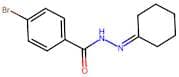
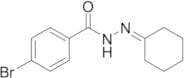
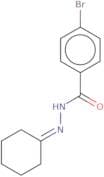
:4-bromo-N'-cyclohexylidenebenzohydrazide
Description:
4-Bromo-N'-cyclohexylidenebenzohydrazide is an organic compound characterized by its hydrazide functional group, which is linked to a cyclohexylidene moiety and a bromobenzene ring. This compound typically exhibits a solid state at room temperature and may have a moderate solubility in organic solvents due to its hydrophobic cyclohexyl group and the presence of the bromine atom, which can influence its reactivity and polarity. The bromine substituent can enhance the compound's electrophilic character, making it potentially useful in various chemical reactions, including nucleophilic substitutions. The hydrazide group may also impart biological activity, making it of interest in pharmaceutical research. Additionally, the structural features suggest potential applications in materials science or as intermediates in organic synthesis. As with many organic compounds, safety precautions should be observed when handling this substance, as it may pose health risks or environmental hazards. Overall, 4-bromo-N'-cyclohexylidenebenzohydrazide represents a versatile compound with potential applications in various fields of chemistry.
Formula:C13H15BrN2O
Synonyms:- O151
- O151 NEW
- 4-bromo-N'-cyclohexylidenebenzohydrazide
- 4-Bromobenzoic acid 2-cyclohexylidenehydrazide
Sort by
Purity (%)
0
100
|
0
|
50
|
90
|
95
|
100
Found 4 products.
4-Bromo-N'-cyclohexylidenebenzohydrazide
CAS:4-Bromo-N'-cyclohexylidenebenzohydrazidePurity:98%Molecular weight:295.18g/molO151 (~90%)
CAS:Controlled ProductFormula:C13H15BrN2OPurity:~90%Color and Shape:NeatMolecular weight:295.18O151
CAS:Selective and potent inhibitor of 8-oxoguanine DNA glycosylase OGG1 with IC50 of 0.6 μM. OGG1 is a key enzyme in DNA repair mechanism called base excision repair (BER). The compound inhibits the hydrolysis of glycosidic bond required for the excision of 8-oxoguanine from double stranded DNA, which leads to accumulation of mutations. It has been proposed as monotherapy for certain types of cancers as well as adjuvant for cancer therapy with DNA damaging agents. It has potential to sensitize tumours for chemotherapy and inhibit development of drug resistance mechanisms.Formula:C13H15BrN2OPurity:Min. 95%Color and Shape:PowderMolecular weight:295.18 g/mol