CAS 30571-56-3
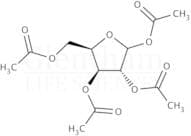
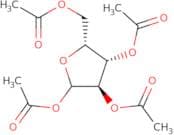
:2,3,4,5-tetra-O-acetylpentose
Description:
2,3,4,5-tetra-O-acetylpentose is a chemical compound that belongs to the class of acetylated sugars, specifically a pentose sugar derivative. It is characterized by the presence of four acetyl groups attached to the hydroxyl groups of the pentose backbone, which enhances its stability and solubility in organic solvents. The acetylation process typically involves the reaction of the sugar with acetic anhydride or acetyl chloride in the presence of a base, resulting in the formation of acetyl esters. This compound is often used in organic synthesis and carbohydrate chemistry as a protective group for hydroxyl functionalities, facilitating further chemical transformations. Its structure contributes to its reactivity, making it a valuable intermediate in the synthesis of more complex carbohydrates and glycosides. Additionally, the presence of multiple acetyl groups can influence the compound's physical properties, such as melting point and solubility, making it an interesting subject of study in both synthetic and analytical chemistry.
Formula:C13H18O9
InChI:InChI=1/C13H18O9/c1-7(15)19-6-12(21-9(3)17)13(22-10(4)18)11(5-14)20-8(2)16/h5,11-13H,6H2,1-4H3
SMILES:CC(=O)OCC(C(C(C=O)OC(=O)C)OC(=O)C)OC(=O)C
Sort by
Purity (%)
0
100
|
0
|
50
|
90
|
95
|
100
Found 2 products.
1,2,3,5-Tetra-O-acetyl-D-xylofuranose
CAS:1,2,3,5-Tetra-O-acetyl-D-xylofuranose is a lectin that has been shown to have an affinity for bacterial cells. It has been shown to be effective against Gram-positive and Gram-negative bacteria, with the exception of mycobacteria. 1,2,3,5-Tetra-O-acetyl-D-xylofuranose binds to the terminal sugar of the cell wall carbohydrate chains of these cells by means of its oligosaccharide side chain. The binding causes conformational changes in the bacterial membrane and disrupts the ion gradient across it. This leads to an influx of water into the cell and subsequent death.Formula:C13H18O9Purity:Min. 95%Color and Shape:Colorless PowderMolecular weight:318.28 g/mol