CAS 3060-50-2
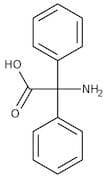
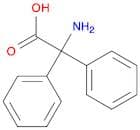
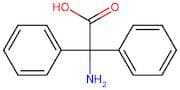
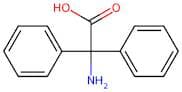
:2,2-Diphenylglycine
Description:
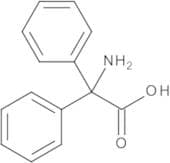
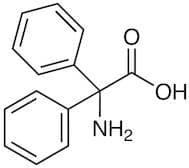
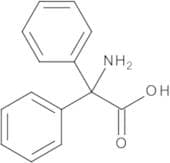
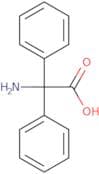
2,2-Diphenylglycine is an organic compound characterized by its unique structure, which features two phenyl groups attached to the nitrogen of a glycine molecule. This compound is typically a white crystalline solid and is known for its relatively low solubility in water, while being more soluble in organic solvents. It exhibits properties that make it useful in various applications, including as a chiral auxiliary in asymmetric synthesis and as a potential ligand in coordination chemistry. The presence of the two phenyl groups contributes to its stability and influences its reactivity, making it an interesting subject of study in both synthetic and medicinal chemistry. Additionally, 2,2-Diphenylglycine can participate in hydrogen bonding due to the amino and carboxyl functional groups, which can affect its interactions in biological systems. Its CAS number, 3060-50-2, is a unique identifier that facilitates its recognition in chemical databases and literature. Overall, 2,2-Diphenylglycine is valued for its versatility and role in advancing chemical research.
Formula:C14H13NO2
InChI:InChI=1S/C14H13NO2/c15-14(13(16)17,11-7-3-1-4-8-11)12-9-5-2-6-10-12/h1-10H,15H2,(H,16,17)
InChI key:InChIKey=YBONNYNNFBAKLI-UHFFFAOYSA-N
SMILES:C(C(O)=O)(N)(C1=CC=CC=C1)C2=CC=CC=C2
Synonyms:- 2,2-Diphenylglycine
- 2-Amino-2,2-diphenylacetic acid
- Alpha-Aminodiphenylacetic Acid
- Amino(Diphenyl)Acetic Acid
- Benzeneacetic acid, α-amino-α-phenyl-
- Glycine, 2,2-diphenyl-
- NSC 33392
- α,α-Diphenylglycine
- α-Amino-α-phenylbenzeneacetic acid
- α-Aminodiphenylacetic acid
Sort by
Purity (%)
0
100
|
0
|
50
|
90
|
95
|
100
Found 14 products.
2,2-Diphenylglycine, 98%
CAS:2,2-Diphenylglycine is used as a synthesis reagent for amination reactions. It acts as an intermediate in pharmaceutical and in organic synthesis. This Thermo Scientific Chemicals brand product was originally part of the Alfa Aesar product portfolio. Some documentation and label information may refFormula:C14H13NO2Purity:98%Color and Shape:White, PowderMolecular weight:227.26Phenytoin Related Compound A (2,2-Diphenylglycine)
CAS:Aromatic amino-acids and their esters, other than those containing more than one kind of oxygen function, nesoiFormula:C14H13NO2Color and Shape:White Off-White PowderMolecular weight:227.09463Benzeneacetic acid, α-amino-α-phenyl-
CAS:Formula:C14H13NO2Purity:95%Color and Shape:SolidMolecular weight:227.25852-Amino-2,2-diphenylacetic acid
CAS:2-Amino-2,2-diphenylacetic acidPurity:99%Molecular weight:227.26g/molPhenytoin EP Impurity C (Phenytoin USP Related Compound A)
CAS:Formula:C14H13NO2Molecular weight:227.27Amino(diphenyl)acetic Acid (2,2-Diphenylglycine)
CAS:Controlled ProductFormula:C14H13NO2Color and Shape:NeatMolecular weight:227.262-Amino-2,2-diphenylacetic Acid
CAS:Formula:C14H13NO2Purity:>98.0%(T)(HPLC)Color and Shape:White to Light yellow powder to crystalMolecular weight:227.262,2-Diphenylglycine
CAS:Formula:C14H13NO2Purity:≥ 97.5%Color and Shape:White to off-white powder or crystalsMolecular weight:227.262,2-Diphenylglycine
CAS:Controlled ProductImpurity Phenytoin USP Related Compound A 2,2-Diphenylglycine
Stability Hygroscopic
Applications 2,2-Diphenylglycine (Phenytoin USP Related Compound A 2,2-Diphenylglycine) is a decomposition product of Phenytoin (D491650), which reduces incidence of grand mal seizures; appears to stabilize excitable membranes perhaps through effects on Na+, K+, and Ca2+ channels.
References Shah, V. et al.: J. Pharm. Sci., 75, 1113 (1986); Faucette, S., et al.: J. Pharmacol. Exp. Ther., 320, 72 (2007); Raymond, H. et al.: Teratol., 10, 237 (1974);Formula:C14H13NO2Color and Shape:White To Off-WhiteMolecular weight:227.262-Amino-2,2-diphenylacetic acid
CAS:Formula:C14H13NO2Purity:95%Color and Shape:Liquid, No data available.Molecular weight:227.263Diphenylglycine
CAS:Diphenylglycine is a chemical compound that has been shown to be an efficient method for the treatment of Alzheimer's disease. It can inhibit the formation of beta-amyloid peptides and aminoisobutyric acid, which are responsible for Alzheimer's disease. The compound has been shown to have high chemical stability and 2-aminoterephthalic acid, which is important in its biological properties. This compound also has two phenyl groups as substituents that are important in its intramolecular hydrogen bond interactions. Diphenylglycine also has anions that may be important in its biological properties.Formula:C14H13NO2Purity:Min. 95%Color and Shape:White To Off-White SolidMolecular weight:227.26 g/mol