CAS 3068-31-3
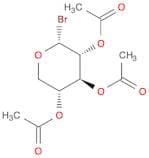
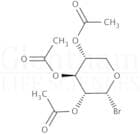
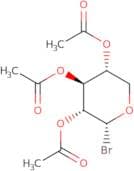
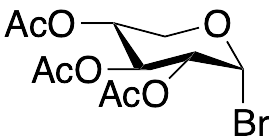
:2,3,4-Tri-O-acetyl-ù-D-xylopyranosyl bromide
Description:
2,3,4-Tri-O-acetyl-β-D-xylopyranosyl bromide is a chemical compound that belongs to the class of glycosides, specifically a halogenated sugar derivative. It is characterized by the presence of a β-D-xylopyranosyl moiety, which is a six-membered cyclic form of the sugar xylose, acetylated at the hydroxyl groups on the 2, 3, and 4 positions. The bromide substituent indicates that it is a brominated derivative, which can enhance its reactivity in various chemical reactions, particularly in glycosylation processes. This compound is typically used in organic synthesis and carbohydrate chemistry, serving as a glycosyl donor in the formation of glycosidic bonds. Its acetyl groups provide protection for the hydroxyl groups, making it a useful intermediate in the synthesis of more complex carbohydrates or glycosides. The compound is generally stable under standard laboratory conditions but should be handled with care due to the presence of the bromide, which can be hazardous.
Formula:.2
Sort by
Purity (%)
0
100
|
0
|
50
|
90
|
95
|
100
Found 7 products.
α-Acetobromo-D-xylose
CAS:(2R,3R,4S,5R)-2-Bromotetrahydro-2H-pyran-3,4,5-triyl triacetateFormula:C11H15BrO7Purity:95%Molecular weight:339.14α-D-Xylopyranosyl bromide, 2,3,4-triacetate
CAS:Formula:C11H15BrO7Purity:95%Color and Shape:SolidMolecular weight:339.13662,3,4-Tri-O-acetyl-α-D-xylopyranosyl bromide
CAS:2,3,4-Tri-O-acetyl-α-D-xylopyranosyl bromideFormula:C11H15BrO7Purity:95%Molecular weight:339.136592,3,4-Tri-O-acetyl-a-D-xylopyranosyl bromide - Stabilised with 2.5% CaCO3
CAS:2,3,4-Tri-O-acetyl-a-D-xylopyranosyl bromide - Stabilised with 2.5% CaCO3 is a chiral compound that is a drug for the treatment of estrogen deficiency in postmenopausal women. It is synthesized from D-xylose and acetone by reductive elimination using an organotin catalyst. The resulting product has a nitro group at the 4 position and can be activated as a priming agent for DNA synthesis. This compound has been shown to be effective in treating intestinal disorders such as ulcerative colitis.
2,3,4-Tri-O-acetyl-a-D-xylopyranosyl bromide - Stabilised with 2.5% CaCO3 has been used to conjugate estrogens with various drugs to create new compounds that are more potent than free estrogens alone. Bioavailability of these conjugates hasFormula:C11H15BrO7Purity:(%) Min. 85%Color and Shape:PowderMolecular weight:339.14 g/mol(2R,3R,4S,5R)-2-Bromotetrahydro-2H-pyran-3,4,5-triyl triacetate
CAS:Formula:C11H15BrO7Purity:95.0%Molecular weight:339.138Bromo 2,3,4-Tri-O-acetyl-α-D-xylopyranoside (Stabilized with 2.5% CaCO3)
CAS:Controlled ProductFormula:C11H15BrO7Color and Shape:NeatMolecular weight:339.14