CAS 3074-27-9
:1H-Indole-5-sulfonamide
Description:
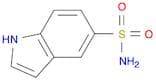
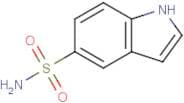
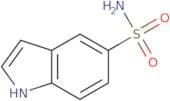
1H-Indole-5-sulfonamide, with the CAS number 3074-27-9, is a chemical compound characterized by its indole structure, which is a bicyclic compound consisting of a six-membered benzene ring fused to a five-membered nitrogen-containing pyrrole ring. This compound features a sulfonamide functional group (-SO2NH2) attached to the indole at the 5-position, which contributes to its chemical reactivity and potential biological activity. 1H-Indole-5-sulfonamide is typically a white to off-white solid and is soluble in polar solvents, such as water and alcohols, due to the presence of the sulfonamide group. It is known for its applications in medicinal chemistry, particularly in the development of pharmaceuticals, as it may exhibit antibacterial, antifungal, or anticancer properties. The compound's structure allows for various interactions with biological targets, making it a subject of interest in drug discovery and development. Proper handling and storage are essential, as with many sulfonamides, to ensure safety and stability.
Formula:C8H8N2O2S
Synonyms:- Indole-5-sulfonamide(6CI,7CI,8CI)
Sort by
Purity (%)
0
100
|
0
|
50
|
90
|
95
|
100
Found 3 products.
1H-Indole-5-sulfonamide
CAS:Formula:C8H8N2O2SPurity:95%Color and Shape:SolidMolecular weight:196.22631H-Indole-5-sulphonamide
CAS:1H-Indole-5-sulphonamideFormula:C8H8N2O2SPurity:≥95%Color and Shape: brown solidMolecular weight:196.23g/mol1H-Indole-5-sulfonamide
CAS:1H-Indole-5-sulfonamide is a molecule that belongs to the class of orientations. It has been shown to have oxidase inhibitory activities and can be used for the treatment of neurodegenerative diseases. 1H-Indole-5-sulfonamide inhibits the activity of dopamine decarboxylase, which is an enzyme involved in the synthesis of dopamine from tyrosine. This inhibition prevents the production of catecholamines, thereby reducing their effects on neurotransmission. 1H-Indole-5-sulfonamide can also bind to amines and other molecules with a nucleophilic group. It is catabolized by enzymes such as propargylamine oxidase or cytochrome P450 reductase, which may lead to functional groups such as trifluoromethyl groups.
Formula:C8H8N2O2SPurity:Min. 95%Molecular weight:196.23 g/mol