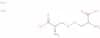
CAS 30925-07-6
:L-Cystine, dihydrochloride
Description:
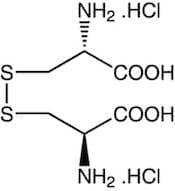
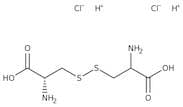
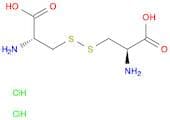
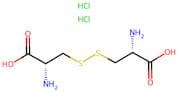
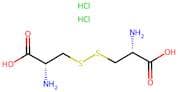
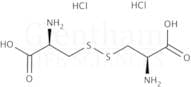
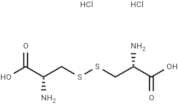
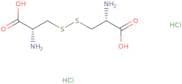
L-Cystine, dihydrochloride is a crystalline compound that is a derivative of the amino acid cysteine, formed by the oxidation of two cysteine molecules. It is characterized by its dipeptide structure, consisting of two cysteine units linked by a disulfide bond. The dihydrochloride form indicates that the compound is associated with two hydrochloride ions, enhancing its solubility in water. L-Cystine is known for its role in protein synthesis and is important in the formation of keratin, which is vital for hair, skin, and nails. It exhibits antioxidant properties, helping to protect cells from oxidative stress. The compound is often used in dietary supplements and has applications in the cosmetic industry due to its potential benefits for skin and hair health. In terms of safety, L-Cystine is generally recognized as safe when used appropriately, but excessive intake may lead to adverse effects. As with any chemical substance, proper handling and storage are essential to maintain its stability and efficacy.
Formula:C6H12N2O4S2·2ClH
InChI:InChI=1S/C6H12N2O4S2.2ClH/c7-3(5(9)10)1-13-14-2-4(8)6(11)12;;/h3-4H,1-2,7-8H2,(H,9,10)(H,11,12);2*1H/t3-,4-;;/m0../s1
InChI key:InChIKey=HHGZUQPEIHGQST-RGVONZFCSA-N
SMILES:[C@H](CSSC[C@@H](C(O)=O)N)(C(O)=O)N.Cl
Synonyms:- <span class="text-smallcaps">L</span>-Cystine, dihydrochloride
- <span class="text-smallcaps">L</span>-Cystine, hydrochloride (1:2)
- Cystine dihydrochloride
- Cystine, dihydrochloride, <span class="text-smallcaps">L</span>-
- Tobuterole HCL
- Cystine, dihydrochloride, L-
- L-Cystine, hydrochloride
- L-Cystine, hydrochloride (1:?)
- L-Cystine, dihydrochloride
- cystine hydrochloride (1:1)
- L-Cystine, hydrochloride (1:2)
- See more synonyms
Sort by
Purity (%)
0
100
|
0
|
50
|
90
|
95
|
100
Found 11 products.
L-(-)-Cystine Dihydrochloride
CAS:Formula:C6H12N2O4S2·2HClPurity:>98.0%(HPLC)Color and Shape:White to Almost white powder to crystalineMolecular weight:313.21L-Cystine dihydrochloride, 99%
CAS:Non-animal sourced L-cystine is used as a cell culture media component for the commercial biomanufacture of therapeutic recombinant proteins and monoclonal antibodies. This Thermo Scientific Chemicals brand product was originally part of the Alfa Aesar product portfolio. Some documentation and labeFormula:C6H14Cl2N2O4S2Purity:99%Color and Shape:White to pale cream or pale yellow, Crystalline powder or powderMolecular weight:313.21L-Cystine dihydrochloride, 98%
CAS:Non-animal sourced L-cystine is used as a cell culture media component for the commercial biomanufacture of therapeutic recombinant proteins and monoclonal antibodies. L-cystine is used as a cell culture supplement. This Thermo Scientific Chemicals brand product was originally part of the Alfa AesarFormula:C6H14Cl2N2O4S2Purity:98%Color and Shape:White to pale yellow, Crystalline powderMolecular weight:313.21L-Cystine, dihydrochloride
CAS:Formula:C6H14Cl2N2O4S2Purity:98%Color and Shape:SolidMolecular weight:313.2224L-Cystine dihydrochloride
CAS:L-Cystine dihydrochloridePurity:98%Color and Shape:SolidMolecular weight:313.22g/molL-Cystine dihydrochloride
CAS:Formula:C6H12N2O4S2·2HClPurity:98.0 - 102.0 % (dried basis)Color and Shape:White, off-white or faint tan powderMolecular weight:313.22L-Cystine Dihydrochloride
CAS:Applications L-Cystine dihydrochloride (cas# 30925-07-6) is a useful research chemical.
Not a dangerous good if item is equal to or less than 1g/ml and there is less than 100g/ml in the packageFormula:C6H12N2O4S2·2(HCl)Color and Shape:White To Off-WhiteMolecular weight:313.22L-Cystine dihydrochloride
CAS:L-Cystine dihydrochloride, a sulfur-based glutathione precursor, maintains GSH balance, used in cell culture.Formula:C6H14Cl2N2O4S2Purity:99.58%Color and Shape:SolidMolecular weight:313.22L-Cystine dihydrochloride
CAS:Formula:C6H14Cl2N2O4S2Purity:98%Color and Shape:SolidMolecular weight:313.21L-Cystine dihydrochloride
CAS:L-Cystine dihydrochloride is a chemical compound that is used as an amino acid. It has biological properties that are due to its ability to inhibit pancreatic lipase and l-threonine. L-Cystine dihydrochloride has been shown to have anti-infectious effects against a number of bacterial and viral diseases, including HIV, herpes simplex virus, and influenza. L-Cystine dihydrochloride is also used in cell culture experiments because it can be used to break disulfide bonds in proteins.Formula:C6H14Cl2N2O4S2Purity:Min. 95%Color and Shape:White PowderMolecular weight:313.22 g/mol