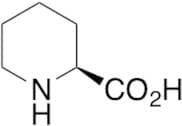
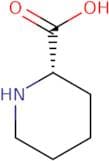
CAS 3105-95-1
:L-Pipecolic acid
Description:
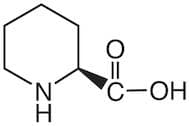
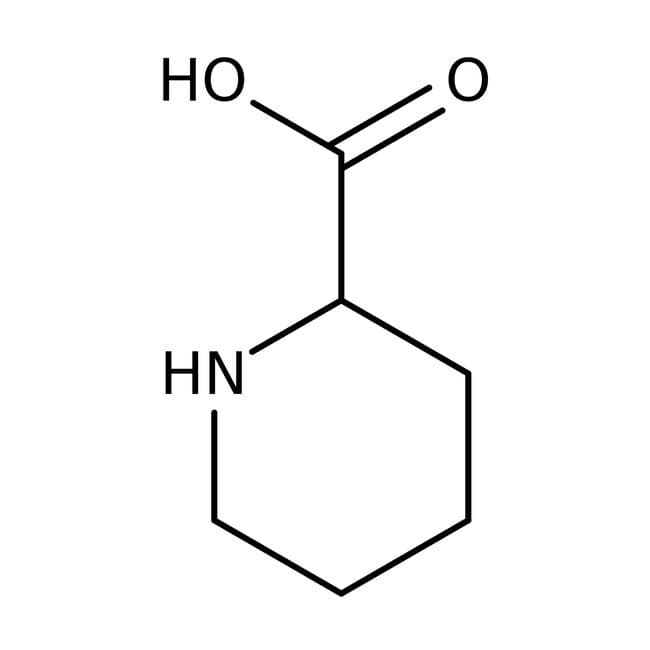
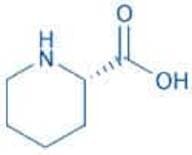
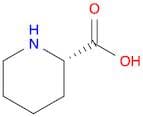
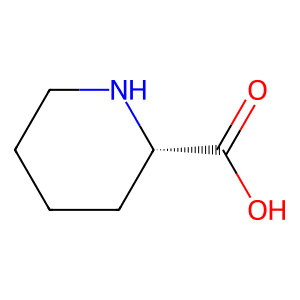
L-Pipecolic acid is a cyclic amino acid characterized by its six-membered piperidine ring structure, which contains a carboxylic acid functional group. It is a naturally occurring compound, often found in various biological systems, and plays a role in the metabolism of lysine. The molecular formula of L-pipecolic acid is C6H11NO2, indicating the presence of carbon, hydrogen, nitrogen, and oxygen atoms. This compound is typically a white to off-white crystalline solid and is soluble in water, reflecting its polar nature due to the carboxylic acid group. L-Pipecolic acid is known for its involvement in several biochemical pathways, including its potential role as a signaling molecule and in the synthesis of other bioactive compounds. Additionally, it has garnered interest in pharmaceutical research for its potential therapeutic applications, particularly in the context of neurological disorders. Its properties, such as melting point and specific reactivity, can vary based on environmental conditions and purity.
Formula:C6H11NO2
InChI:InChI=1S/C6H11NO2/c8-6(9)5-3-1-2-4-7-5/h5,7H,1-4H2,(H,8,9)/t5-/m0/s1
InChI key:InChIKey=HXEACLLIILLPRG-YFKPBYRVSA-N
SMILES:C(O)(=O)[C@@H]1CCCCN1
Synonyms:- (-)-Pipecolic acid
- (-)-Pipecolinic acid
- (2S)-2-Piperidinecarboxylic acid
- (2S)-Piperidin-1-ium-2-carboxylate
- (2S)-piperidine-2-carboxylate
- (2S)-piperidine-2-carboxylic acid
- (S)-(-)-2-Piperidinecarboxylic Acid
- (S)-(-)-Pipecolic acid
- (S)-Pipecolinic acid
- (S)-Piperidine-2-carboxylic acid
- 2-Piperidinecarboxylic acid (2S)-
- 2-Piperidinecarboxylic acid, (S)-
- <span class="text-smallcaps">L</span>-(-)-Pipecolic acid
- <span class="text-smallcaps">L</span>-Homoproline
- <span class="text-smallcaps">L</span>-Pipecolinic acid
- <span class="text-smallcaps">L</span>-Piperidine-2-carboxylic acid
- L(-)-2-Pipecolinic acid
- L(-)-Pipecolinic Acid
- L-Homoproline
- NSC 93089
- See more synonyms
Sort by
Purity (%)
0
100
|
0
|
50
|
90
|
95
|
100
Found 11 products.
L-Pipecolic Acid
CAS:Formula:C6H11NO2Purity:>98.0%(T)(HPLC)Color and Shape:White to Light yellow powder to crystalMolecular weight:129.16L-Pipecolinic acid, 99%
CAS:L-Pipecolinic acid is involved in synaptic transmission in the central nervous system. It is also used as pharmaceutical intermediate. This Thermo Scientific Chemicals brand product was originally part of the Alfa Aesar product portfolio. Some documentation and label information may refer to the legFormula:C6H11NO2Purity:99%Color and Shape:Powder, White to creamMolecular weight:129.16H-Homopro-OH
CAS:High enantioselectivies could be achieved (> 98% ee) when choosing L-pipecolic acid as catalyst for asymmetric Mannich reactions.Formula:C6H11NO2Purity:> 99%Color and Shape:WhitishMolecular weight:129.162-Piperidinecarboxylic acid, (2S)-
CAS:Formula:C6H11NO2Purity:97%Color and Shape:SolidMolecular weight:129.1570L-Pipecolic acid
CAS:Formula:C6H11NO2Color and Shape:White to off-white powderMolecular weight:129.16(L)-Pipecolinic acid
CAS:(L)-Pipecolinic acidFormula:C6H11NO2Purity:98%Color and Shape:SolidMolecular weight:129.15703L-Pipecolic acid
CAS:L-Pipecolic acid, a lysine metabolite, builds up in infants with peroxisomal genetic disorders like Zellweger syndrome.Formula:C6H11NO2Purity:99.75% - 99.92%Color and Shape:SolidMolecular weight:129.16L-Pipecolic Acid
CAS:Applications Pipecolic acid is involved in synaptic transmission in the central nervous system. The l-form occurs in plants.
References Nomura Y., et al.: Neurochem. Res., 6, 391 (1981),Formula:C6H11NO2Color and Shape:NeatMolecular weight:129.16Pipecolic acid
CAS:Pipecolic acid is a metabolite of tryptophan that has been shown to inhibit the proliferation of pluripotent cells in vitro. Pipecolic acid was also shown to have a significant effect on the reaction mechanism of dinucleotide phosphate, which is essential for the synthesis of DNA and RNA. Pipecolic acid can be synthesized from picolinic acid through an amide bond formation. This compound is also found in wild-type strains as well as cancerous and infectious strains of bacteria. Pipecolic acid inhibits bacterial growth by binding to the active site of specific enzymes, such as methionine adenosyltransferase and ribonucleotide reductase, leading to the inhibition of protein synthesis and cell division. It has been shown to inhibit leukemia inhibitory factor (LIF) activity in vitro, suggesting that it may be involved in urinary infections. Pipecolic acid can also be prepared using preparative high-performance liquid chromatography (preparFormula:C6H11NO2Purity:Min. 95%Color and Shape:White PowderMolecular weight:129.16 g/mol