

![Phenol, 4-[2-(4-pyridinyl)ethenyl]-](/_next/image/?url=https%3A%2Fstatic.cymitquimica.com%2Fcas-image%2Fthumb-webp%2F588248-phenol-4-2-4-pyridinyl-ethenyl.webp&w=3840&q=75)
CAS 31067-32-0
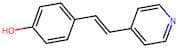
:Phenol, 4-[2-(4-pyridinyl)ethenyl]-
- 4-(2-(Pyridin-4-yl)vinyl)phenol
- Phenol, 4-[2-(4-pyridinyl)ethenyl]-
Phenol, 4-[2-(4-pyridinyl)ethenyl]-
CAS:Formula:C13H11NOPurity:98%Color and Shape:SolidMolecular weight:197.23254-(2-(Pyridin-4-yl)vinyl)phenol
CAS:4-(2-(Pyridin-4-yl)vinyl)phenolPurity:99%Molecular weight:197.23g/mol4-[2-(Pyridin-4-yl)ethenyl]phenol
CAS:4-[2-(Pyridin-4-yl)ethenyl]phenol is a reactive compound that reacts with nucleophiles in the presence of an activation system to generate reactive intermediates or reactive products. This chemical is used as a substrate in assays to quantify substances, such as proteins, nucleic acids, and enzymes. The signal generated by these reactions can be quantitated and measured using various detection systems. 4-[2-(Pyridin-4-yl)ethenyl]phenol reacts with nucleophiles through electrophilic addition reactions to generate reactive intermediates or reactive products. This chemical is often used as a substrate in assays to quantify substances such as proteins, nucleic acids, and enzymes. The signal generated by these reactions can be quantitated and measured using various detection systems.
Formula:C13H11NOPurity:Min. 95%Molecular weight:197.23 g/mol
![Phenol, 4-[2-(4-pyridinyl)ethenyl]-](/_next/image/?url=https%3A%2Fstatic.cymitquimica.com%2Fproducts%2FIN%2Fthumb%2FDA003210.jpg&w=3840&q=75)


![4-[2-(PYRIDIN-4-YL)ETHENYL]PHENOL](/_next/image/?url=https%3A%2Fstatic.cymitquimica.com%2Fproducts%2F10%2Fthumb%2FF852302.jpg&w=3840&q=75)

![4-[2-(Pyridin-4-yl)ethenyl]phenol](/_next/image/?url=https%3A%2Fstatic.cymitquimica.com%2Fproducts%2F3D%2Fthumb%2FGBA06732.jpg&w=3840&q=75)
