CAS 3114-44-1
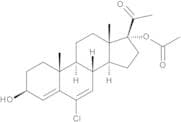
:3β-Hydroxychlormadinone acetate
Description:
3β-Hydroxychlormadinone acetate, with the CAS number 3114-44-1, is a synthetic steroid and a derivative of the natural hormone progesterone. It is primarily characterized by its anti-inflammatory and progestational properties, making it useful in various therapeutic applications, particularly in hormonal treatments and contraceptives. The compound features a steroid backbone with a hydroxyl group at the 3β position and an acetate group, which enhances its lipophilicity and bioavailability. It is typically administered in the form of oral tablets or injectable formulations. The substance exhibits a range of pharmacological effects, including the modulation of reproductive functions and the regulation of menstrual cycles. Additionally, it may have applications in treating conditions such as endometriosis and certain types of hormonal imbalances. As with many synthetic hormones, its use should be monitored due to potential side effects and contraindications. Overall, 3β-Hydroxychlormadinone acetate represents a significant compound in the field of endocrinology and reproductive health.
Formula:C23H31ClO4
InChI:InChI=1S/C23H31ClO4/c1-13(25)23(28-14(2)26)10-7-18-16-12-20(24)19-11-15(27)5-8-21(19,3)17(16)6-9-22(18,23)4/h11-12,15-18,27H,5-10H2,1-4H3/t15-,16+,17-,18-,21+,22-,23-/m0/s1
InChI key:InChIKey=QQEHDZXXCDSAFE-JBSAMAPISA-N
SMILES:O(C(C)=O)[C@@]1(C(C)=O)[C@]2(C)[C@@](CC1)([C@]3([C@](CC2)([C@]4(C)C(C(Cl)=C3)=C[C@@H](O)CC4)[H])[H])[H]
Synonyms:- (3β)-17-(Acetyloxy)-6-chloro-3-hydroxypregna-4,6-dien-20-one
- 17α-Acetoxy-6-chloro-3β-hydroxypregna-4,6-dien-20-one
- 3β-Hydroxychlormadinone acetate
- 6-Chloro-3β,17-dihydroxypregna-4,6-dien-20-one 17-acetate
- Ay 11497
- Chlormadinol acetate
- Pregna-4,6-dien-20-one, 17-(acetyloxy)-6-chloro-3-hydroxy-, (3beta)-
- Pregna-4,6-dien-20-one, 17-(acetyloxy)-6-chloro-3-hydroxy-, (3β)-
- Pregna-4,6-dien-20-one, 6-chloro-3β,17-dihydroxy-, 17-acetate
Sort by
Purity (%)
0
100
|
0
|
50
|
90
|
95
|
100
Found 5 products.
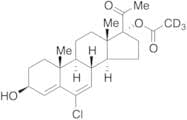
Chlormadinol Acetate-d3 (Major)
CAS:Controlled ProductApplications Chlormadinol Acetate-d3, is the labeled analogue of Chlormadinol Acetate (C343460), the active metabolite of Chlormadinone acetate (CMA) (C343500).
References Vaitukaitis, J., et al.: J. Clin. Endocrinol. Metab., 33, 988 (1971), Handy, R., et al.: Drug Metab. Disposition., 2, 214 (1974), Fiet, J., et al.: Steroids, 66, 609 (2001),Formula:C23H28D3ClO4Color and Shape:NeatMolecular weight:409.96Chlormadinol Acetate
CAS:Controlled ProductApplications The active metabolite of Chlormadinone acetate (CMA) (C343500).
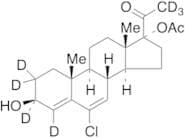
References Vaitukaitis, J., et al.: J. Clin. Endocrinol. Metab., 33, 988 (1971), Handy, R., et al.: Drug Metab. Disposition., 2, 214 (1974), Fiet, J., et al.: Steroids, 66, 609 (2001),Formula:C23H31ClO4Color and Shape:NeatMolecular weight:406.94Chlormadinol Acetate-d7
CAS:Controlled ProductFormula:C23D7H24ClO4Color and Shape:NeatMolecular weight:413.986Chlormadinol acetate
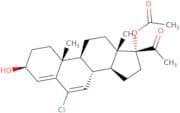
CAS:Controlled ProductChlormadinol acetate is a stable complex of a fatty acid and an antibiotic that is used to treat infections caused by bacteria. It has been shown to have high resistance to antimicrobial agents, including amoxicillin-clavulanic acid, tetracycline, and multidrug efflux pumps. Chlormadinol acetate has also been shown to inhibit the growth of certain cancer cells in vitro and in vivo using gene therapy. This drug also inhibits bacterial protein synthesis by binding to the 30S ribosomal subunit and preventing the formation of a functional 70S ribosome. Chlormadinol acetate has been shown to be clinically relevant in mice when used with amoxicillin-clavulanic acid or tetracycline.Formula:C23H31ClO4Purity:Min. 95%Molecular weight:406.94 g/mol