CAS 314-41-0
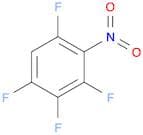
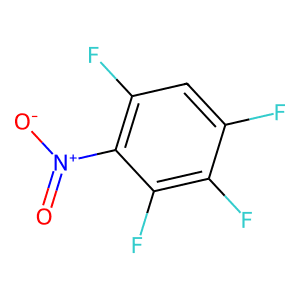
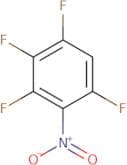
:1,2,3,5-Tetrafluoro-4-nitrobenzene
Description:
1,2,3,5-Tetrafluoro-4-nitrobenzene is an aromatic compound characterized by the presence of four fluorine atoms and one nitro group attached to a benzene ring. The molecular structure features a nitro group (-NO2) at the para position relative to the carbon bearing the fluorine substituents. This compound is typically a pale yellow solid at room temperature and is known for its high stability and low volatility. Its fluorinated nature imparts unique properties, such as increased electronegativity and hydrophobicity, making it useful in various chemical applications, including as a reagent in organic synthesis and in the development of fluorinated materials. The presence of the nitro group also contributes to its reactivity, allowing for potential electrophilic substitution reactions. Safety considerations are important when handling this compound, as it may pose health risks if inhaled or ingested, and appropriate precautions should be taken to minimize exposure. Overall, 1,2,3,5-Tetrafluoro-4-nitrobenzene is a significant compound in the field of synthetic organic chemistry.
Formula:C6HF4NO2
InChI:InChI=1S/C6HF4NO2/c7-2-1-3(8)6(11(12)13)5(10)4(2)9/h1H
InChI key:InChIKey=FDLCUAUNAWWSBX-UHFFFAOYSA-N
SMILES:N(=O)(=O)C1=C(F)C(F)=C(F)C=C1F
Synonyms:- 1,2,3,5-Tetrafluoro-4-Nitrobenzene
- 2,3,4,6-Tetrafluoro-1-nitrobenzene
- 2-Fluoro-3-Methyl-Benzoic Acid
- Benzene, 1,2,3,5-tetrafluoro-4-nitro-
- 2,3,4,6-Tetrafluoronitrobenzene
Sort by
Purity (%)
0
100
|
0
|
50
|
90
|
95
|
100
Found 4 products.
1,2,3,5-Tetrafluoro-4-nitrobenzene
CAS:Formula:C6HF4NO2Purity:97%Color and Shape:LiquidMolecular weight:195.07132,3,4,6-Tetrafluoronitrobenzene
CAS:2,3,4,6-TetrafluoronitrobenzenePurity:97%Color and Shape:LiquidMolecular weight:195.07g/mol2,3,4,6-Tetrafluoronitrobenzene
CAS:2,3,4,6-Tetrafluoronitrobenzene is a fluorinated molecule that has been shown to be an excellent substrate for the hydrolysis of acetonitrile. The reaction products are a mixture of ortho and para isomers with equal amounts of 2,3,4- and 6-fluoro derivatives. The rate of the reaction is dependent on the number of water molecules present in the system. Tetramethylguanidine (TMG) can be used as a catalyst to increase the rate of the hydrolysis reaction without changing its course. The result is an increased yield with decreased time required to complete the experiment.Formula:C6HF4NO2Purity:Min. 95%Color and Shape:Light (Or Pale) Yellow To Yellow LiquidMolecular weight:195.07 g/mol