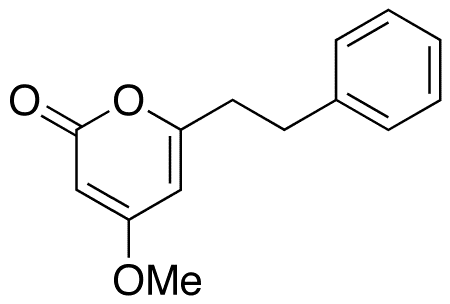
CAS 3155-51-9
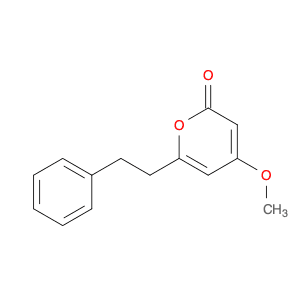
:5,6-Didehydro-7,8-dihydrokawain
Description:
5,6-Didehydro-7,8-dihydrokawain, identified by its CAS number 3155-51-9, is a chemical compound belonging to the class of natural products known as chalcones. It is derived from the plant species of the genus *Kawain*, which is known for its psychoactive properties. This compound features a unique structure characterized by a conjugated system of double bonds, contributing to its potential biological activity. It exhibits properties such as antioxidant and anti-inflammatory effects, which have garnered interest in pharmacological research. The compound is typically studied for its effects on the central nervous system, and it may interact with various neurotransmitter systems. Additionally, its solubility and stability can vary depending on environmental conditions, which is important for its application in both research and potential therapeutic contexts. As with many natural products, further studies are necessary to fully elucidate its mechanisms of action and potential health benefits.
Formula:C14H14O3
InChI:InChI=1/C14H14O3/c1-16-13-9-12(17-14(15)10-13)8-7-11-5-3-2-4-6-11/h2-6,9-10H,7-8H2,1H3
InChI key:InChIKey=OVXOWIKMOIVICB-UHFFFAOYSA-N
SMILES:C(CC1=CC=CC=C1)C2=CC(OC)=CC(=O)O2
Synonyms:- 2,4-Heptadienoic acid, 5-hydroxy-3-methoxy-7-phenyl-, δ-lactone
- 2H-Pyran-2-one, 4-methoxy-6-(2-phenylethyl)-
- 2H-Pyran-2-one, 4-methoxy-6-phenethyl-
- 5,6-Dehydro-7,8-dihydrokavain
- 5,6-Didehydro-7,8-dihydrokawain
- Kawain, 5,6-dehydro-7,8-dihydro-
- 4-Methoxy-6-(2-phenylethyl)-2H-pyran-2-one
- 7,8-dihydro-5,6-dehydrokawain
Sort by
Purity (%)
0
100
|
0
|
50
|
90
|
95
|
100
Found 5 products.
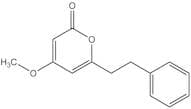
7,8-dihydro-5,6-dehydrokawain
CAS:Formula:C14H14O3Purity:98.0%Color and Shape:SolidMolecular weight:230.25925,6-dehydro 7,8-dihydrokavain
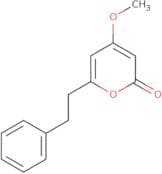
CAS:LactoneFormula:C14H14O3Purity:≥ 95.0 % (HPLC)Color and Shape:PowderMolecular weight:230.264-Methoxy-6-(2-phenylethyl)-2H-pyran-2-one
CAS:4-Methoxy-6-(2-phenylethyl)-2H-pyran-2-one is a phosphorothionate insecticide that has been used in biotechnology and horticulture. It is effective against termites, ants, and plant pathogenic fungi. The mechanism of action for this compound is not well understood, but it has been shown to have antifungal activity against different species of fungi. 4-Methoxy-6-(2-phenylethyl)-2H-pyran-2-one can be synthesized from 2,4,6,-triisopropylbenzenesulfonyl chloride with alpine plants such as alpinia or corticium. This compound also has a pleasant odor reminiscent of the aromatic ethers found in speciosa leaves. The chemical structure of 4-methoxy-6-(2 phenylethyl)-2H pyran 2 one can beFormula:C14H14O3Purity:Min. 95%Color and Shape:PowderMolecular weight:230.26 g/mol4-Methoxy-6-(2-phenylethyl)-2H-pyran-2-one-d3
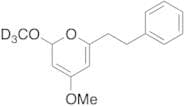
CAS:Controlled ProductFormula:C15D3H15O3Color and Shape:NeatMolecular weight:249.324-Methoxy-6-(2-phenylethyl)-2H-pyran-2-one
CAS:Controlled ProductApplications 4-Methoxy-6-(2-phenylethyl)-2H-pyran-2-one is a Kawain (K145490) derivative that is known to exhibit antimalarial and antituberculosis activities. 4-Methoxy-6-(2-phenylethyl)-2H-pyran-2-one has been identified as a lead compound for the dual treatment of malaria and leishmaniasis.
References McCracken, S.T., et al.: Bioorg. Med. Chem., 20, 1482 (2012); Elzaawely, A.A.. et al.: Food. Chem., 103, 486 (2007); Xuan, T.D., et al.: J. Natural. Med., 62, 188 (2008);Formula:C14H14O3Color and Shape:NeatMolecular weight:230.26