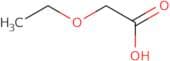
CAS 31621-87-1
:Polydioxanone
Description:
Polydioxanone (PDO) is a biodegradable polymer widely used in medical applications, particularly for sutures and tissue engineering. It is a synthetic polymer derived from the polymerization of dioxanone monomers. PDO exhibits excellent biocompatibility and biodegradability, making it suitable for temporary implants and controlled drug delivery systems. The polymer is characterized by its high tensile strength and elasticity, which contribute to its effectiveness in surgical applications. PDO degrades through hydrolysis, breaking down into non-toxic byproducts that can be absorbed or excreted by the body. Its degradation rate can be influenced by factors such as molecular weight and environmental conditions. Additionally, PDO has a low inflammatory response, which is crucial for minimizing complications in medical procedures. The material is also known for its flexibility and ease of processing, allowing for various forms such as films, fibers, and scaffolds. Overall, polydioxanone is a versatile and valuable material in the field of biomedical engineering.
Formula:(C4H6O3)n
SMILES:C(COCC*)(O*)=O
Synonyms:- 1,4-Dioxan-2-one homopolymer, sru
- PDS
- Poly(1,4-dioxanone), SRU
- Poly(oxycarbonylmethyleneoxyethylene)
- Poly(p-dioxanone),SRU
- Polydioxanone
- Resomer X 206S
- Resomer X 210
- b-Hydroxyethoxyacetic acidhomopolymer, SRU
- p-Dioxanone homopolymer, sru
- β-Hydroxyethoxyacetic acid homopolymer, SRU
- See more synonyms
Sort by
Purity (%)
0
100
|
0
|
50
|
90
|
95
|
100
Found 1 products.
Poly(dioxanone)
CAS:Poly(dioxanone) is a biocompatible polymer that has been shown to promote bone growth in animal models. It is a cross-linking agent and can be used as an alternative to copper chromite, which is the most common cross-linking agent used in tissue engineering. Poly(dioxanone) has been shown to promote bone growth by stimulating the production of growth factors and increasing the activity of osteoblasts, cells that produce new bone. The material also promotes matrix deposition and remodeling, leading to increased bone density.
Formula:(C4H6O3)nPurity:Min. 95%Color and Shape:Powder