CAS 31652-78-5
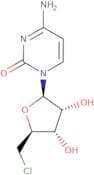
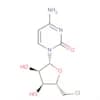
:5'-chloro-5'-deoxycytidine
Description:
5'-Chloro-5'-deoxycytidine, with the CAS number 31652-78-5, is a nucleoside analog that features a chlorinated pyrimidine base. It is structurally related to the natural nucleoside cytidine, differing primarily by the presence of a chlorine atom at the 5' position of the sugar moiety. This modification can influence its biological activity, particularly in the context of antiviral and anticancer research, as it may interfere with nucleic acid synthesis. The compound is typically white to off-white in appearance and is soluble in water and organic solvents, which facilitates its use in various biochemical applications. Its mechanism of action often involves incorporation into DNA or RNA, leading to disruption of normal cellular processes. As a research chemical, it is important to handle 5'-chloro-5'-deoxycytidine with care, following appropriate safety protocols, as with any chemical that may have biological effects. Its potential therapeutic applications continue to be explored in the fields of molecular biology and pharmacology.
Formula:C9H12ClN3O4
Sort by
Purity (%)
0
100
|
0
|
50
|
90
|
95
|
100
Found 3 products.
5-Chloro-5'-deoxycytidine
CAS:5-Chloro-5'-deoxycytidine is a nucleoside with antiviral activity. It is used for the synthesis of phosphoramidites, which are used in DNA and RNA synthesis. 5-Chloro-5'-deoxycytidine has been shown to be an effective activator for novel DNA and RNA analogues, such as phosphorothioates, phosphotriesters, and phosphorodithioates. This compound is also widely used in the preparation of oligodeoxynucleotide analogues that are modified chemically or structurally to improve their biological properties. 5-Chloro-5'-deoxycytidine has been synthesized by modifying the nucleobase with a 5-chloro group at the 5' position on the ribose ring, making it more resistant to degradation by enzymes than other cytosine derivatives.Formula:C9H12ClN3O4Purity:Min. 95%Color and Shape:White to off-white solid.Molecular weight:261.67 g/mol