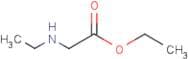
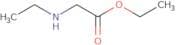
CAS 3183-20-8
:Glycine, N-ethyl-, ethyl ester
Description:
Glycine, N-ethyl-, ethyl ester, with the CAS number 3183-20-8, is an organic compound that belongs to the class of amino acid esters. It is characterized by the presence of an ethyl group attached to the nitrogen of glycine, which is the simplest amino acid. This modification enhances its lipophilicity compared to glycine itself. The compound typically appears as a colorless to pale yellow liquid and has a relatively low molecular weight. Glycine, N-ethyl-, ethyl ester is soluble in organic solvents and may exhibit moderate solubility in water due to the presence of the amino group. It is often used in various chemical syntheses and may serve as an intermediate in the production of pharmaceuticals and agrochemicals. Additionally, its ester functionality can participate in reactions such as hydrolysis and transesterification. Safety data should be consulted for handling and storage, as with any chemical substance, to ensure proper precautions are taken.
Formula:C6H13NO2
Synonyms:- Glycine, N-ethyl-, ethyl ester
- Ethylamino-aceticacidethylester
- UKRORGSYN-BB BBV-143324
- ethyl 2-(ethylamino)acetate
- Ethyl ethylglycinate
Sort by
Purity (%)
0
100
|
0
|
50
|
90
|
95
|
100
Found 2 products.
Ethylamino-acetic acid ethyl ester
CAS:Ethylamino-acetic acid ethyl esterPurity:95%Color and Shape:LiquidMolecular weight:131.17g/molethyl 2-(ethylamino)acetate
CAS:Ethyl 2-(ethylamino)acetate is an aldehyde that is naturally found in many plants. It is also used in the laboratory as a chemical intermediate and has a number of uses in organic chemistry, such as the synthesis of fulleropyrrolidines, which are used as topical anti-inflammatory agents. In nature, ethyl 2-(ethylamino)acetate can be found in plants that produce azomethine compounds. It can be synthesized by 1,3-dipolar cycloaddition reactions between an azomethine and an alkyne or by cleavage of esters with acid.Formula:C6H13NO2Purity:Min. 95%Molecular weight:131.2 g/mol