CAS 3196-23-4
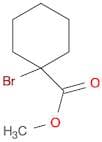
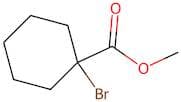
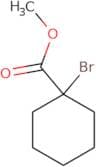
:methyl 1-bromocyclohexanecarboxylate
Description:
Methyl 1-bromocyclohexanecarboxylate is an organic compound characterized by its structure, which includes a cyclohexane ring substituted with a bromine atom and a carboxylate ester functional group. This compound typically appears as a colorless to pale yellow liquid with a distinctive odor. It is soluble in organic solvents such as ethanol and ether but has limited solubility in water due to its hydrophobic cyclohexane ring. The presence of the bromine atom makes it a reactive species, often participating in nucleophilic substitution reactions. Methyl 1-bromocyclohexanecarboxylate can be synthesized through various methods, including the bromination of cyclohexanecarboxylic acid derivatives. Its applications may extend to organic synthesis, particularly in the preparation of more complex molecules and in medicinal chemistry. As with many brominated compounds, it is essential to handle it with care due to potential toxicity and environmental concerns associated with halogenated organic compounds.
Formula:C8H13BrO2
InChI:InChI=1/C8H13BrO2/c1-11-7(10)8(9)5-3-2-4-6-8/h2-6H2,1H3
SMILES:COC(=O)C1(CCCCC1)Br
Sort by
Purity (%)
0
100
|
0
|
50
|
90
|
95
|
100
Found 4 products.
Methyl 1-bromocyclohexanecarboxylate
CAS:Formula:C8H13BrO2Purity:98%Color and Shape:LiquidMolecular weight:221.0916Methyl 1-bromocyclohexanecarboxylate
CAS:Methyl 1-bromocyclohexanecarboxylatePurity:97%Molecular weight:221.09g/molMethyl 1-bromocyclohexanecarboxylate
CAS:Formula:C8H13BrO2Purity:98%Color and Shape:LiquidMolecular weight:221.094Methyl 1-bromocyclohexanecarboxylate
CAS:Methyl 1-bromocyclohexanecarboxylate is an enolate and amide that is used as a dehydrogenase inhibitor. The reaction mechanism of methyl 1-bromocyclohexanecarboxylate has been elucidated. It exists in the form of a crystal with a molecular formula of CHBrO. This compound inhibits the activity of dehydrogenases, which are enzymes that catalyze the oxidation of alcohols to aldehydes or ketones, by reacting with the chloride ion and forming a chalcone. The chalcone then reacts with nucleophilic molecules such as water or hydroxide ions, which leads to the production of an inhibitory product. Methyl 1-bromocyclohexanecarboxylate also has antinociceptive effects, which may be due to its inhibition of prostaglandin synthesis.Formula:C8H13BrO2Purity:Min. 95%Molecular weight:221.09 g/mol