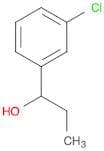
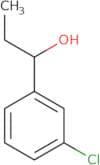
CAS 32019-30-0
:3-Chloro-α-ethylbenzenemethanol
Description:
3-Chloro-α-ethylbenzenemethanol, identified by its CAS number 32019-30-0, is an organic compound characterized by the presence of a chloro substituent and an ethyl group attached to a benzene ring, along with a hydroxymethyl group. This compound typically exhibits properties associated with aromatic alcohols, including moderate solubility in organic solvents and limited solubility in water due to its hydrophobic aromatic structure. The chloro group introduces reactivity, making it a potential candidate for nucleophilic substitution reactions. The presence of the hydroxymethyl group suggests that it may participate in hydrogen bonding, influencing its physical properties such as boiling and melting points. Additionally, the compound may exhibit biological activity, which could be of interest in medicinal chemistry. Its synthesis and applications could be relevant in various fields, including pharmaceuticals and agrochemicals. As with many chlorinated compounds, safety precautions should be observed due to potential toxicity and environmental impact.
Formula:C9H11ClO
InChI:InChI=1S/C9H11ClO/c1-2-9(11)7-4-3-5-8(10)6-7/h3-6,9,11H,2H2,1H3
InChI key:InChIKey=APYGJPRINQKIQF-UHFFFAOYSA-N
SMILES:C(CC)(O)C1=CC(Cl)=CC=C1
Synonyms:- 3-Chloro-α-ethylbenzenemethanol
- 1-(3-Chlorophenyl)propan-1-ol
- Benzenemethanol, 3-chloro-α-ethyl-
- Benzyl alcohol, m-chloro-α-ethyl-
- 1-(m-Chlorophenyl)-1-propanol
Sort by
Purity (%)
0
100
|
0
|
50
|
90
|
95
|
100
Found 3 products.
1-(3-Chlorophenyl)propan-1-ol
CAS:Formula:C9H11ClOPurity:97%Color and Shape:LiquidMolecular weight:170.63601-(3-Chlorophenyl)propan-1-ol
CAS:The enantiomers of 1-(3-chlorophenyl)propan-1-ol are separated by a chiral column, yielding the (R)-enantiomer. The yield of the reaction is determined by the amount of oxidizing agent used to oxidize the alcohol and can be calculated by multiplying the molarity of the reactant and dividing it by the molarity of the product. The enantioselective oxidation of arylethyl alcohols with peracids in an aqueous solution was studied in this experiment. Nocardia and corallina are two examples of bacteria that produce this compound as part of their metabolism. Unreacted 1-(3-chlorophenyl)propan-1-ol can be found in ketones and carbinols, as well as other compounds containing an erythylene group.Formula:C9H11OClPurity:Min. 95%Molecular weight:170.63 g/mol