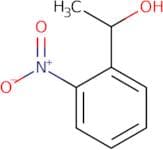
CAS 3205-25-2
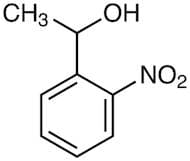
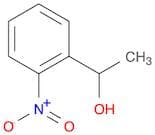
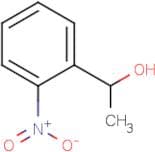
:1-(2-nitrophenyl)ethanol
Description:
1-(2-Nitrophenyl)ethanol, with the CAS number 3205-25-2, is an organic compound characterized by the presence of a nitrophenyl group attached to an ethanol moiety. This compound features a hydroxyl (-OH) group, which contributes to its classification as an alcohol. The nitro group (-NO2) is positioned on the second carbon of the phenyl ring, influencing the compound's reactivity and polarity. Typically, 1-(2-nitrophenyl)ethanol appears as a solid or liquid, depending on the specific conditions, and is known for its potential applications in organic synthesis and as an intermediate in the production of various chemical compounds. The presence of both the hydroxyl and nitro groups can impart unique properties, such as increased solubility in polar solvents and the ability to participate in hydrogen bonding. Additionally, the compound may exhibit interesting electronic properties due to the electron-withdrawing nature of the nitro group, which can affect its behavior in chemical reactions. Safety precautions should be taken when handling this substance, as nitro compounds can be hazardous.
Formula:C8H9NO3
InChI:InChI=1/C8H9NO3/c1-6(10)7-4-2-3-5-8(7)9(11)12/h2-6,10H,1H3
SMILES:CC(c1ccccc1N(=O)=O)O
Synonyms:- Benzenemethanol, alpha-methyl-2-nitro-
- Nitrophenylethanol
Sort by
Purity (%)
0
100
|
0
|
50
|
90
|
95
|
100
Found 6 products.
1-(2-Nitrophenyl)ethanol
CAS:Formula:C8H9NO3Purity:>98.0%(GC)Color and Shape:Light yellow to Yellow to Orange clear liquidMolecular weight:167.161-(2-Nitrophenyl)ethanol
CAS:Formula:C8H9NO3Purity:97%Color and Shape:LiquidMolecular weight:167.1620(R,S)-1-(2-Nitrophenyl)ethanol
CAS:Controlled ProductApplications (R,S)-1-(2-Nitrophenyl)ethanol (cas# 3205-25-2) is a compound useful in organic synthesis.
Formula:C8H9NO3Color and Shape:NeatMolecular weight:167.16c(R,S)-1-(2-Nitrophenyl)ethanol
CAS:1,2-Dichloroethane is an organic solvent that has a number of industrial uses. It is also used as an antigen for the detection of antibodies in biological studies. 1,2-Dichloroethane reacts with free amino groups on proteins to form antigen-binding sites. The cavity created by the reaction then binds to the antigen and induces a change in fluorescence. This process can be detected using fluorescence resonance energy transfer (FRET). Irradiation of 1,2-dichloroethane leads to the formation of reactive oxygen species (ROS) such as singlet oxygen, which can react with aspartyl groups in proteins to form diphosgene. This reaction can lead to protein denaturation and loss of function, which may be responsible for some of the toxic effects observed with this compound.Formula:C8H9NO3Purity:Min. 95%Color and Shape:PowderMolecular weight:167.16 g/mol