CAS 3213-50-1
:ethyl cyano(cyclohexyl)acetate
Description:
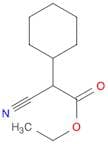
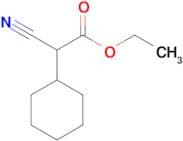
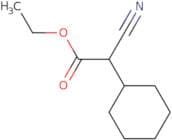
Ethyl cyano(cyclohexyl)acetate, with the CAS number 3213-50-1, is an organic compound characterized by its ester functional group, which is formed from the reaction of cyanoacetic acid and cyclohexanol. This compound typically appears as a colorless to pale yellow liquid and has a distinctive fruity odor. It is soluble in organic solvents such as ethanol and ether but has limited solubility in water due to its hydrophobic cyclohexyl group. Ethyl cyano(cyclohexyl)acetate is primarily used in organic synthesis, particularly in the production of various pharmaceuticals and agrochemicals, owing to its ability to serve as a building block in chemical reactions. The presence of both cyano and ester functionalities allows for diverse reactivity, making it a valuable intermediate in synthetic chemistry. Safety data indicates that, like many organic compounds, it should be handled with care, as it may pose health risks if inhaled or ingested, and appropriate safety measures should be taken during its use and storage.
Formula:C11H17NO2
InChI:InChI=1/C11H17NO2/c1-2-14-11(13)10(8-12)9-6-4-3-5-7-9/h9-10H,2-7H2,1H3
SMILES:CCOC(=O)C(C#N)C1CCCCC1
Synonyms:- Cyclohexaneacetic acid, .alpha.-cyano-, ethyl ester
- Ethyl cyano(cyclohexyl)acetate
Sort by
Purity (%)
0
100
|
0
|
50
|
90
|
95
|
100
Found 3 products.
Ethyl 2-cyano-2-cyclohexylacetate
CAS:<p>Ethyl 2-cyano-2-cyclohexylacetate is an organic compound that belongs to the group of cycloaliphatic amides. It is a colorless liquid with a camphoraceous odor. The molecule consists of two rings: one of these is an aromatic ring, and the other is a saturated cycloalkane ring. This compound is prepared by the saponification and decarboxylation of camphene. Ethyl 2-cyano-2-cyclohexylacetate has been shown to react with hydrochloric acid to form nitro compounds, which are gaseous at room temperature. At higher temperatures, it decomposes into peroxides, peroxide, and isopropyl radicals.</p>Formula:C11H17NO2Purity:Min. 95%Molecular weight:195.26 g/mol