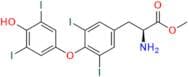
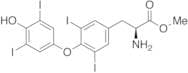
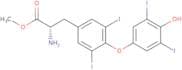
CAS 32180-11-3
:L-Tyrosine, O-(4-hydroxy-3,5-diiodophenyl)-3,5-diiodo-, methyl ester
Thyroxine methyl ester
CAS:Formula:C16H13I4NO4Purity:95%Color and Shape:SolidMolecular weight:790.8966Thyroxine Methyl Ester
CAS:Controlled ProductApplications Thyroxine Methyl Ester is the methyl ester analog of Thyroxine (T425600) with high cross reactivity with thyroxine-specific monoclonal antibodies of humans and lab animals. It is an inhibitor of malate dehydrogenase.Thyroxine Methyl Ester is suitable for malate dehydrogenase (MDH) related research.
References Mpoko, C.N. et al.: Clin. Chim. Acta, 146, 215 (1985); Maggio, E.T. et al.: Biochim. Biophys. Acta Enzymol., 522, 284 (1978);Formula:C16H13I4NO4Color and Shape:NeatMolecular weight:790.93,3',5,5'-Tetraiodo-thyro-methylester
CAS:The TEMED is a synthetic compound that is used as a catalyst to accelerate the rate of many chemical reactions. It is produced by reacting ethylene diamine with two equivalents of iodine in the presence of triethylamine and then purified. TEMED can be used in immunological assays, such as ELISA, in which it reacts with the antigen and binds to the receptor on the solid phase. The intensity of light emission is proportional to the amount of antigen present and can be detected at very low levels. TEMED also enhances polypeptide synthesis by accelerating enzymatic reactions that are involved in protein metabolism.
Formula:C16H13I4NO4Purity:Min. 95 Area-%Color and Shape:PowderMolecular weight:790.9 g/molRef: 3D-FT137485
Discontinued product