CAS 32262-17-2
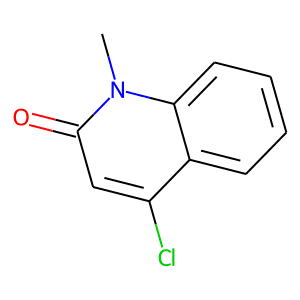
:4-chloro-1-methylquinolin-2(1H)-one
Description:
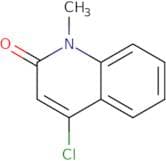
4-Chloro-1-methylquinolin-2(1H)-one is a heterocyclic organic compound characterized by a quinoline structure, which consists of a fused benzene and pyridine ring. This compound features a chlorine atom at the 4-position and a methyl group at the 1-position of the quinoline ring, along with a carbonyl group at the 2-position, contributing to its classification as a quinolinone. It typically appears as a solid at room temperature and is soluble in organic solvents. The presence of the chlorine atom can influence its reactivity and biological activity, making it of interest in medicinal chemistry and drug development. The compound may exhibit various pharmacological properties, including antimicrobial and antitumor activities, due to its structural features. Its CAS number, 32262-17-2, is a unique identifier that facilitates its identification in chemical databases and literature. As with many quinoline derivatives, it may also participate in various chemical reactions, including nucleophilic substitutions and cyclization processes, making it a versatile compound in synthetic organic chemistry.
Formula:C10H8ClNO
InChI:InChI=1/C10H8ClNO/c1-12-9-5-3-2-4-7(9)8(11)6-10(12)13/h2-6H,1H3
SMILES:Cn1c2ccccc2c(cc1=O)Cl
Synonyms:- 2(1H)-quinolinone, 4-chloro-1-methyl-
- 4-Chloro-1-methyl-2(1H)-quinolinone
- Quinolin-2(1H)-one, 4-chloro-1-methyl-
- 4-Chloro-1-methylquinolin-2(1H)-one
Sort by
Purity (%)
0
100
|
0
|
50
|
90
|
95
|
100
Found 3 products.
4-Chloro-1-methylquinolin-2(1H)-one
CAS:4-Chloro-1-methylquinolin-2(1H)-oneFormula:C10H8ClNOPurity:≥95%Color and Shape: pale lemon. wooly powderMolecular weight:193.63g/mol4-Chloro-1-methylquinolin-2(1H)-one
CAS:4-Chloro-1-methylquinolin-2(1H)-one is a molecule with analgesic activity. It has been shown to produce analgesia in the rat tail flick and hot plate tests, as well as anti-nociceptive effects in the mouse formalin test. The analgesic effect of 4-chloro-1-methylquinolin-2(1H)-one is thought to be due to its ability to inhibit the release of excitatory neurotransmitters from peripheral sensory neurons. This molecule has also been shown to have anti-inflammatory properties and is an intermediate for the synthesis of other drugs, such as diclofenac sodium.
Formula:C10H8ClNOPurity:Min. 95%Molecular weight:193.63 g/mol