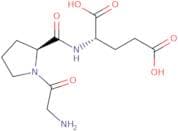
CAS 32302-76-4
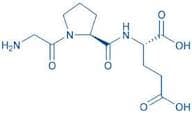
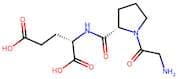
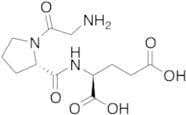
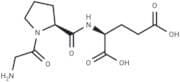
:glycyl-L-prolyl-L-glutamic acid
Description:
Glycyl-L-prolyl-L-glutamic acid, also known by its CAS number 32302-76-4, is a tripeptide composed of three amino acids: glycine, proline, and glutamic acid. This compound exhibits characteristics typical of peptides, including the ability to form hydrogen bonds and adopt specific conformations due to its amino acid sequence. Glycyl-L-prolyl-L-glutamic acid is known for its potential biological activities, which may include roles in cellular signaling and modulation of physiological processes. The presence of proline in its structure can impart unique conformational properties, influencing its stability and interaction with other biomolecules. Additionally, the glutamic acid residue contributes to the peptide's overall charge and hydrophilicity, which can affect its solubility in aqueous environments. This tripeptide may be of interest in various fields, including biochemistry and pharmacology, for its potential applications in drug development and as a research tool in studying peptide interactions and functions.
Formula:C12H19N3O6
InChI:InChI=1/C12H19N3O6/c13-6-9(16)15-5-1-2-8(15)11(19)14-7(12(20)21)3-4-10(17)18/h7-8H,1-6,13H2,(H,14,19)(H,17,18)(H,20,21)/t7-,8-/m0/s1
SMILES:C1C[C@@H](C(=N[C@@H](CCC(=O)O)C(=O)O)O)N(C1)C(=O)CN
Synonyms:- L-glutamic acid, glycyl-L-prolyl-
- Glycyl-Prolyl-Glutamic Acid
Sort by
Purity (%)
0
100
|
0
|
50
|
90
|
95
|
100
Found 5 products.
IGF-I (1-3)
CAS:This N-terminal tripeptide of IGF-I facilitated the in vitro release of acetylcholine with a several hundredfold higher potency (10⁻¹⁰ – 10⁻⁶ M) than intact IGF-I (4 · 10⁻⁸ M), whereas truncated IGF-I lacking the tripeptide GPE, did not show any significant effect. This raises the possibility that GPE may be the active site of IGF-I. – Although the precise mode of action of GPE is still unknown, another study suggests that local administration of GPE is neuroprotective after brain HI injury via glial cells. In addition, systemic administration of GPE showed a more widespread neuroprotective effect. Therefore, GPE may represent a complementary pathway for central and systemic IGF-1’s antiapoptotic effects.Formula:C12H19N3O6Purity:99.7%Color and Shape:White PowderMolecular weight:301.3Gly-Pro-Glu
CAS:Controlled ProductApplications GLY-PRO-GLU (cas# 32302-76-4) is a useful research chemical.
Formula:C12H19N3O6Color and Shape:NeatMolecular weight:301.296Glypromate
CAS:Glypromate (Gly-Pro-Glu) is a neuroprotective agent, is a weak NMDA receptor agonistFormula:C12H19N3O6Purity:98%Color and Shape:SolidMolecular weight:301.3IGF-I (1-3)
CAS:IGF-I (1-3) H-Gly-Pro-Glu-OH is a synthetic peptide that has been shown to be effective in treating neuronal death caused by glutamate. It binds to calcium ions and inhibits the activity of gamma-aminobutyric acid, which is an inhibitory neurotransmitter. IGF-I (1-3) H-Gly-Pro-Glu-OH also blocks fatty acid synthesis, leading to necrotic cell death. In vitro assays have shown that this drug can protect against blood group O erythrocytes from pyridoxal phosphate oxidation and protocatechuic acid binding. This drug has also been shown to increase locomotor activity in mice, as well as improve motor function in rats with experimental stroke. IGF-I (1-3) H-Gly-Pro-Glu-OH is synthesized using a polymerase chain reaction technique and consists of amino acids 1 through 3 ofFormula:C12H19N3O6Purity:Min. 95%Molecular weight:301.3 g/mol