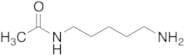
CAS 32343-73-0
:Acetylcadaverine
Description:
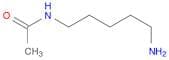
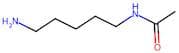
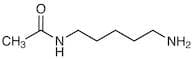
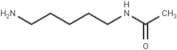
Acetylcadaverine, with the CAS number 32343-73-0, is a biogenic amine derived from the decarboxylation of lysine. It is characterized by its structure, which includes an acetyl group attached to the cadaverine backbone, a diamine composed of two amino groups separated by a four-carbon chain. This compound is typically found in biological systems and is associated with various metabolic processes. Acetylcadaverine is known for its role in the synthesis of polyamines, which are crucial for cellular growth and function. It exhibits basic properties due to the presence of amino groups, allowing it to participate in various chemical reactions, including acylation and amination. Additionally, acetylcadaverine can be involved in the formation of odoriferous compounds, contributing to the characteristic smells associated with certain biological processes. Its solubility in water and organic solvents makes it versatile for various applications in biochemical research and industrial processes. Overall, acetylcadaverine is an important compound in the study of metabolism and cellular functions.
Formula:C7H16N2O
InChI:InChI=1S/C7H16N2O/c1-7(10)9-6-4-2-3-5-8/h2-6,8H2,1H3,(H,9,10)
InChI key:InChIKey=RMOIHHAKNOFHOE-UHFFFAOYSA-N
SMILES:C(CCCCN)NC(C)=O
Synonyms:- Acetylcadaverine
- Monoacetyl cadaverine
- N-Acetylcadaverine
- acetamide, N-(5-aminopentyl)-
- N-(5-Aminopentyl)acetamide
Sort by
Purity (%)
0
100
|
0
|
50
|
90
|
95
|
100
Found 6 products.
N-(5-Aminopentyl)acetamide
CAS:Formula:C7H16N2OPurity:>97.0%(GC)(T)Color and Shape:Colorless to Light yellow to Light orange clear liquidMolecular weight:144.22N-(5-Aminopentyl)acetamide
CAS:N-Acetylcadaverine, acetylated cadaverine, toxic in large doses, potential cancer/pathophysiology marker.Formula:C7H16N2OPurity:99.87%Color and Shape:SolidMolecular weight:144.21N-(5-Aminopentyl)acetamide
CAS:Controlled ProductApplications N-(5-Aminopentyl)acetamide is an acetylated polyamine, a promising biochemical marker for cancer and many other pathophysiological conditions.
Not a dangerous good if item is equal to or less than 1g/ml and there is less than 100g/ml in the package
References Hakkinen, M. R., et al.: J. Chromatogr. B. Analyt. Technol. Biomed. Life Sci., 941, 81 (2013); Paik, M., et al.: Clin. Chim. Acta, 411, 1532 (2010)Formula:C7H16N2OColor and Shape:NeatMolecular weight:144.21