CAS 3235-82-3
:Ethyl morpholinoacetate
Description:
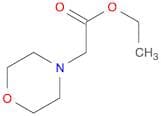
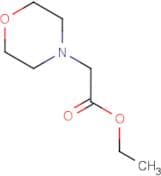
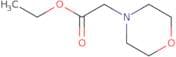
Ethyl morpholinoacetate is an organic compound characterized by its ester functional group, derived from morpholine and acetic acid. It typically appears as a colorless to pale yellow liquid with a distinctive odor. The compound is soluble in organic solvents, such as ethanol and ether, but has limited solubility in water due to its hydrophobic characteristics. Ethyl morpholinoacetate is known for its role as an intermediate in the synthesis of various pharmaceuticals and agrochemicals, owing to the morpholine moiety that can enhance biological activity. It exhibits moderate toxicity, necessitating careful handling and appropriate safety measures during use. The compound's chemical structure includes an ethyl group, a morpholino ring, and an acetate group, contributing to its reactivity and potential applications in organic synthesis. As with many chemical substances, it is important to consult safety data sheets and regulatory guidelines when working with ethyl morpholinoacetate to ensure safe handling and compliance with environmental regulations.
Formula:C8H16NO3
InChI:InChI=1/C8H15NO3/c1-2-12-8(10)7-9-3-5-11-6-4-9/h2-7H2,1H3/p+1
Synonyms:- Ethyl 2-Morpholinoacetatep
- Ethyl 2-Morpholinoacetate
- 4-(2-Ethoxy-2-Oxoethyl)Morpholin-4-Ium
Sort by
Purity (%)
0
100
|
0
|
50
|
90
|
95
|
100
Found 5 products.
Ethyl 2-morpholinoacetate
CAS:Formula:C8H15NO3Purity:97%Color and Shape:SolidMolecular weight:173.2096Ethyl morpholinoacetate
CAS:Ethyl morpholinoacetate is a molecule that has been shown to have binding activities with DNA and RNA sequences. It has also been shown to be an efficient method for diagnosis of acidic, inflammatory diseases, amines, and antibacterial activity. Ethyl morpholinoacetate binds to the enzyme regulatory site on the ribosome, causing a change in the shape of the ribosome that affects its ability to bind tRNA. The nucleophilic nature of this molecule allows it to be synthesized from morpholine and a nucleophilic reagent such as sodium cyanide or lithium diisopropylamide. This synthetic substrate can then be used in research on chemical structures.Formula:C8H15NO3Purity:Min. 95%Color and Shape:Clear LiquidMolecular weight:173.21 g/molEthyl 2-morpholinoacetate
CAS:Formula:C8H15NO3Purity:95%Color and Shape:LiquidMolecular weight:173.212