CAS 3237-50-1
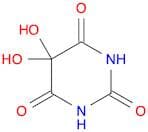
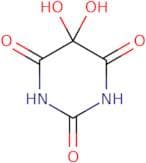
:5,5-Dihydroxy-2,4,6(1H,3H,5H)-pyrimidinetrione
Description:
5,5-Dihydroxy-2,4,6(1H,3H,5H)-pyrimidinetrione, also known as uracil-5,5-diol, is a pyrimidine derivative characterized by the presence of two hydroxyl groups at the 5-position and a trione structure. This compound features a six-membered aromatic ring containing nitrogen atoms, which contributes to its stability and reactivity. It is typically a white to off-white crystalline solid, soluble in water due to the presence of hydroxyl groups that can form hydrogen bonds. The compound exhibits properties typical of pyrimidines, including potential biological activity, as it may interact with nucleic acids and enzymes. Its structure allows for tautomeric forms, which can influence its reactivity and interactions in biochemical pathways. 5,5-Dihydroxy-2,4,6(1H,3H,5H)-pyrimidinetrione is of interest in various fields, including medicinal chemistry and biochemistry, due to its potential applications in drug development and as a biochemical probe.
Formula:C4H4N2O5
InChI:InChI=1S/C4H4N2O5/c7-1-4(10,11)2(8)6-3(9)5-1/h10-11H,(H2,5,6,7,8,9)
InChI key:InChIKey=ZIIHZVKHFWOENY-UHFFFAOYSA-N
SMILES:OC1(O)C(=O)NC(=O)NC1=O
Synonyms:- 2,4,6(1H,3H,5H)-Pyrimidinetrione, 5,5-dihydroxy-
- 5-24-09-00382 (Beilstein Handbook Reference)
- 5,5-Dihydroxy-2,4,6(1H,3H,5H)-pyrimidinetrione
- 2,4,5,6(1H,3H)-Pyrimidinetetrone, monohydrate
- NSC 221304
- 2,4,5,6(1H,3H)-Pyrimidinetetrone hydrate
- Alloxan hydrate
- 5,5-Dihydroxybarbituric acid
- 2,4,6(1H,3H,5H)-Pyrimidinetrione, 5,5-dihydroxy-
- 5,5-dihydroxypyrimidine-2,4,6(1H,3H,5H)-trione
- BRN 0155548
- Alloxan monohydrate
- Alloxan hydrate
- 2,4,6(1H,3H,5H)-Pyrimidinetrione, 5,5-dihydroxy- (9CI)
- 5,5-Dihydroxyperhydropyrimidinetrione
- Alloxan monohydrate
- CCRIS 5957
- Barbituric acid, 5,5-dihydroxy-
- See more synonyms
Sort by
Purity (%)
0
100
|
0
|
50
|
90
|
95
|
100
Found 4 products.
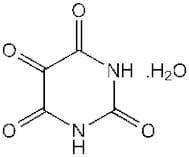
Alloxan monohydrate, 98%
CAS:Cytotoxic compound that causes oxidative base damage to nuclear DNAAlloxan monohydrate is used as a precursor to prepare purple dye murexide. It is also used in research models to induce diabetes and destroy beta cells. Further, it is a strong oxidizing agent and it forms a hemiacetal with its reduc
Formula:C4H2N2O4•H2OPurity:98%Color and Shape:White to cream to yellow to brown to black, Crystals or powder or crystalline powderMolecular weight:160.09 (142.07anhy)5,5-Dihydroxypyrimidine-2,4,6(1H,3H,5H)-trione
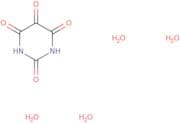
CAS:Formula:C4H4N2O5Color and Shape:SolidMolecular weight:160.0850Alloxan hydrate
CAS:A pyrimidine derivative, widely used for the induction of diabetes in experimental animals. It preferentially accumulates in pancreatic β cells in Langerhans islets via glucose transporter GLUT2. In the presence of intracellular thiols such as glutathione, it gets involved in a cyclic redox reaction with its reduction product, dialuric acid. This triggers the production of toxic levels of reactive oxygen species (ROS) and directs the cells in necrosis. Alloxan also inhibits glucokinase, which regulates glucose-induced insulin secretion.Formula:C4H2N2O4•xH2OPurity:Min. 95%Molecular weight:142.07 g/mol5,5-Dihydroxypyrimidine-2,4,6(1H,3H,5H)-trione
CAS:Controlled Product5,5-Dihydroxypyrimidine-2,4,6(1H,3H,5H)-trione is a chemical compound that is found in animals. It is an intermediate in the biosynthesis of pyrimidines. This molecule has been shown to have hypoglycemic effects when administered orally to diabetic patients. 5,5-Dihydroxypyrimidine-2,4,6(1H,3H,5H)-trione can be metabolized by nitro and alkoxy radicals to form reactive oxygen species that are cytotoxic. This chemical also has insulin-like growth factor activity and can stimulate the production of density lipoprotein (LDL).Formula:C4H4N2O5Purity:Min. 95%Molecular weight:160.09 g/mol