CAS 32588-36-6
:Indole-2-Acetic Acid
Description:
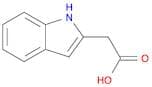
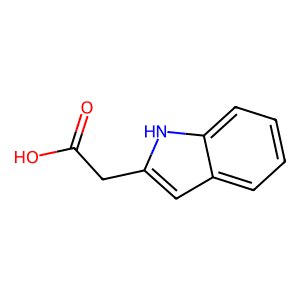
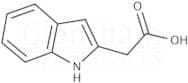
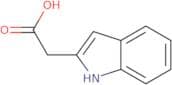
Indole-2-acetic acid (IAA) is a naturally occurring plant hormone belonging to the auxin class, playing a crucial role in regulating plant growth and development. It is characterized by its indole structure, which consists of a fused benzene and pyrrole ring, with an acetic acid functional group attached at the 2-position. This compound is typically a white to pale yellow crystalline solid, soluble in polar solvents such as water and ethanol. IAA is involved in various physiological processes, including cell elongation, apical dominance, root formation, and responses to light and gravity. Its action is mediated through specific receptors and signaling pathways, influencing gene expression and cellular activities. Additionally, IAA can be synthesized through various pathways in plants, primarily from the amino acid tryptophan. Due to its significant role in plant biology, indole-2-acetic acid is widely studied for its applications in agriculture and horticulture, particularly in promoting root growth and enhancing crop yields.
Formula:C10H9NO2
InChI:InChI=1/C10H9NO2/c12-10(13)6-8-5-7-3-1-2-4-9(7)11-8/h1-5,11H,6H2,(H,12,13)
SMILES:c1ccc2c(c1)cc(CC(=O)O)[nH]2
Synonyms:- 1H-Indol-2-ylacetic acid
- 2-Indoleacetic acid
- T56 Bmj C1Vq
- 1H-Indole-2-acetic acid
- 1h-indole-2-acetic acid (as sodium salt)
- INDOLE-2-ACETIC ACID
- (1H-INDOL-2-YL)-ACETIC ACID
- 2-Indolylacetic acid
- 2-(2-indolyl)acetic acid 4-nitrophenyl ester
Sort by
Purity (%)
0
100
|
0
|
50
|
90
|
95
|
100
Found 5 products.
(1H-Indol-2-yl)acetic acid
CAS:(1H-Indol-2-yl)acetic acidFormula:C10H9NO2Purity:98%Color and Shape: red-brown solidMolecular weight:175.18g/molIndole-2-acetic acid
CAS:Indole-2-acetic acid is a coumarin derivative that is found in plants and is used as a dietary supplement. It has been shown to have an inhibitory effect on photosynthetic activity and the growth of bacteria, fungi, and protozoa. Indole-2-acetic acid can be produced by chemical reactions involving aromatic hydrocarbons such as benzene or dioxane. It also inhibits the production of insulin in vivo and has been shown to reduce insulin resistance in rats.
Formula:C10H9NO2Purity:Min. 95%Color and Shape:PowderMolecular weight:175.18 g/mol