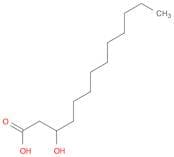
CAS 32602-69-0
:Tridecanoic acid,3-hydroxy-
Description:
Tridecanoic acid, 3-hydroxy- is a fatty acid characterized by a long carbon chain, specifically containing 13 carbon atoms with a hydroxyl group (-OH) at the third carbon position. This compound is classified as a medium-chain fatty acid and is part of the family of hydroxy fatty acids, which are known for their unique properties and potential applications in various fields, including biochemistry and materials science. The presence of the hydroxyl group contributes to its solubility in polar solvents and can influence its reactivity and interactions with other molecules. Tridecanoic acid, 3-hydroxy- may exhibit antimicrobial properties and is of interest in the development of surfactants, emulsifiers, and other functional materials. Its structural characteristics also suggest potential uses in the synthesis of esters and other derivatives, which can be valuable in the formulation of cosmetics, pharmaceuticals, and food products. Overall, this compound represents a versatile building block in organic chemistry and industrial applications.
Formula:C13H26O3
Synonyms:- 3-Hydroxytridecanoicacid
- b-Hydroxytridecanoic acid
Sort by
Purity (%)
0
100
|
0
|
50
|
90
|
95
|
100
Found 5 products.
3-Hydroxytridecanoic acid
CAS:Formula:C13H26O3Purity:98%Color and Shape:SolidMolecular weight:230.34373-Hydroxy tridecanoic acid
CAS:3-Hydroxy tridecanoic acid is a saturated fatty acid found in the LPS of bacteria and can be used as an internal standard for the detection of microbial marker.Formula:C13H26O3Purity:99.92%Color and Shape:SolidMolecular weight:230.343-Hydroxytridecanoic acid
CAS:Formula:C13H26O3Purity:>98%Color and Shape:SolidMolecular weight:230.343-Hydroxytridecanoic acid
CAS:3-Hydroxytridecanoic acid is a fatty acid that is found in the marine sponge, Halichondria okadai. It has been shown to have a linear calibration curve with hydrochloric acid and can be used as an indicator of chronic exposure to this chemical. 3-Hydroxytridecanoic acid has been shown to cause allergic reactions in some people, but there are no studies on its health effects. This compound also contains fatty acids, which are allergens for some people. The concentrations of 3-hydroxytridecanoic acid in the environment can be analyzed using chemical analyses and molecular methods.br>br> The marine sponge Halichondria okadai produces the fatty acid 3-hydroxytridecanoic acid. This compound has been shown to have a linear calibration curve with hydrochloric acid and can be used as an indicator of chronic exposure to this chemical. 3-hydroxytridecanoic acid has been shownFormula:C13H26O3Purity:Min. 95%Molecular weight:230.34 g/mol