CAS 32659-49-7
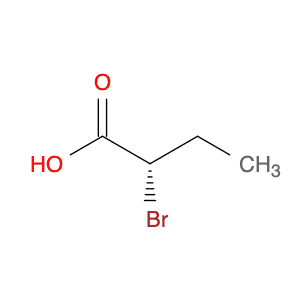
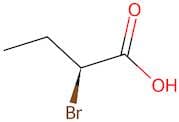
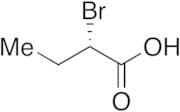
:Butanoic acid,2-bromo-, (2S)-
Description:
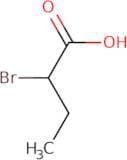
Butanoic acid, 2-bromo-, (2S)-, with the CAS number 32659-49-7, is a chiral compound characterized by the presence of a bromine atom at the second carbon of the butanoic acid chain. This compound belongs to the class of carboxylic acids, which are known for their acidic properties due to the presence of a carboxyl group (-COOH). The (2S) designation indicates that it has a specific stereochemistry, making it one of two enantiomers. Butanoic acid itself is a four-carbon straight-chain fatty acid, and the introduction of the bromine atom can influence its reactivity and interactions with other molecules. The presence of the bromine atom may enhance its electrophilic character, making it useful in various chemical reactions, including substitution and coupling reactions. Additionally, butanoic acid derivatives are often studied for their biological activity and potential applications in pharmaceuticals and agrochemicals. Overall, this compound exhibits unique properties due to its structural features and stereochemistry.
Formula:C4H7BrO2
Synonyms:- Butanoicacid, 2-bromo-, (S)-
- Butyric acid, 2-bromo-, (S)-
- (S)-2-Bromobutanoicacid
- (S)-2-Bromobutyric acid
- L-2-Bromobutanoic acid
- L-2-Bromobutyric acid
- L-a-Bromobutanoic acid
Sort by
Purity (%)
0
100
|
0
|
50
|
90
|
95
|
100
Found 6 products.
(S)-2-Bromobutyric Acid
CAS:Controlled ProductApplications (S)-2-Bromobutyric Acid is a key intermediate for the introduction of a particular stereogenic unit into the structure of chiral active pharmaceutical compounds,
Not a dangerous good if item is equal to or less than 1g/ml and there is less than 100g/ml in the package
References Brenna, E. et al.: Org. Proc. Res. Dev., 16, 262 (2012);Formula:C4H7BrO2Color and Shape:ColourlessMolecular weight:167.0(S)-2-Bromobutyric acid
CAS:(S)-2-Bromobutyric acid is a chiral compound. It is an enantiomer of the biologically inactive (R)-2-bromobutyric acid. The (S)-enantiomer has been shown to exhibit biological activity, with a kinetic and detectable activity that are similar to those of the parent molecule. This compound can be used as a precursor for pharmaceuticals, such as antibiotics, which would be useful in cases where bacteria have developed resistance to existing antibiotics. The dehalogenase enzyme catalyzes the hydrolysis of halogenated aromatic compounds in a way that produces an alcohol and hydrogen bromide. This reaction can be detected by changes in the chemical properties of the environment or by detecting changes in the optical rotation or fluorescence of the product.Formula:C4H7BrO2Purity:Min. 95%Molecular weight:167 g/mol