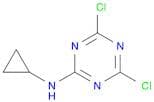
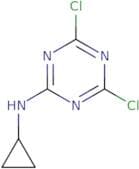
CAS 32889-45-5
:1,3,5-Triazin-2-amine,4,6-dichloro-N-cyclopropyl-
Description:
1,3,5-Triazin-2-amine, 4,6-dichloro-N-cyclopropyl- is a chemical compound characterized by its triazine ring structure, which consists of three nitrogen atoms and three carbon atoms. This compound features two chlorine substituents at the 4 and 6 positions of the triazine ring, contributing to its reactivity and potential applications in various fields. The presence of the cyclopropyl group at the nitrogen position enhances its structural diversity and may influence its biological activity. Typically, compounds of this nature are studied for their potential use in agrochemicals, pharmaceuticals, or as intermediates in organic synthesis. The dichloro substitution pattern can impart specific properties such as increased stability or altered solubility in different solvents. Additionally, the compound may exhibit unique interactions with biological systems, making it of interest in medicinal chemistry. Safety and handling precautions should be observed due to the presence of chlorine, which can pose health risks. Overall, this compound exemplifies the complexity and utility of nitrogen-containing heterocycles in chemical research.
Formula:C6H6Cl2N4
Synonyms:- s-Triazine,2,4-dichloro-6-(cyclopropylamino)- (8CI)
- 2,4-Dichloro-6-cyclopropylamino-1,3,5-triazine
- 2-Cyclopropylamino-4,6-dichloro-s-triazine
Sort by
Purity (%)
0
100
|
0
|
50
|
90
|
95
|
100
Found 3 products.
2-N-cyclopropylamino-4,6-dichloro triazine
CAS:2-N-Cyclopropylamino-4,6-dichloro triazine is a chlorinated triazine herbicide. It is used to control broadleaf weeds and grasses in rice fields. The toxic effects of 2-N-cyclopropylamino-4,6-dichloro triazine are related to its amination by ethanol in the presence of hydrochloric acid. This reaction takes place in the presence of water, yielding cyanuric chloride and hydrogen chloride gas. Cyanuric chloride reacts with water to form cyanuric acid and hydrogen chloride gas. Cyanuric acid is highly toxic because it inhibits the Krebs cycle in cells, which leads to cell death. The reaction time for this herbicide ranges from 8 hours to 24 hours depending on the temperature.Formula:C6H8Cl2N4Purity:Min. 95%Molecular weight:207.61 g/mol