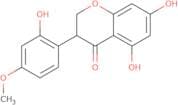
CAS 32898-79-6
:2,3-Dihydro-5,7-dihydroxy-3-(2-hydroxy-4-methoxyphenyl)-4H-1-benzopyran-4-one
Description:
2,3-Dihydro-5,7-dihydroxy-3-(2-hydroxy-4-methoxyphenyl)-4H-1-benzopyran-4-one, also known by its CAS number 32898-79-6, is a flavonoid compound characterized by its complex polyphenolic structure. This substance features a benzopyran core, which is typical of flavonoids, and includes multiple hydroxyl groups that contribute to its antioxidant properties. The presence of methoxy and hydroxy substituents enhances its potential biological activity, including anti-inflammatory and anticancer effects. It is soluble in organic solvents and exhibits moderate solubility in water, which can influence its bioavailability and pharmacokinetics. The compound's structural features suggest it may interact with various biological targets, making it of interest in medicinal chemistry and natural product research. Additionally, its stability and reactivity can be influenced by environmental factors such as pH and light exposure, which are important considerations for its application in pharmaceuticals or as a dietary supplement. Overall, this compound represents a significant area of study due to its potential health benefits and therapeutic applications.
Formula:C16H14O6
InChI:InChI=1S/C16H14O6/c1-21-9-2-3-10(12(18)6-9)11-7-22-14-5-8(17)4-13(19)15(14)16(11)20/h2-6,11,17-19H,7H2,1H3
InChI key:InChIKey=CBEPNYOFLRIAGR-UHFFFAOYSA-N
SMILES:O=C1C(COC=2C1=C(O)C=C(O)C2)C3=C(O)C=C(OC)C=C3
Synonyms:- 4H-1-Benzopyran-4-one, 2,3-dihydro-5,7-dihydroxy-3-(2-hydroxy-4-methoxyphenyl)-, (±)-
- 4H-1-Benzopyran-4-one, 2,3-dihydro-5,7-dihydroxy-3-(2-hydroxy-4-methoxyphenyl)-
- 2,3-Dihydro-5,7-dihydroxy-3-(2-hydroxy-4-methoxyphenyl)-4H-1-benzopyran-4-one
- Ferreirin
Sort by
Purity (%)
0
100
|
0
|
50
|
90
|
95
|
100
Found 1 products.
Ferreirin
CAS:Ferreirin is an iron chelator, which is derived from natural sources. It functions by binding to excess iron ions in biological systems, forming a stable complex that can be excreted from the body. This mode of action is critical in managing iron overload conditions, often seen in various pathological states such as thalassemia or hemochromatosis where excess iron poses a risk of oxidative damage to cells and tissues.
Formula:C16H14O6Purity:Min. 95%Molecular weight:302.28 g/mol