


CAS 33155-90-7
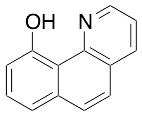
:Hydroxybenzoquinoline
Description:
Hydroxybenzoquinoline, with the CAS number 33155-90-7, is a chemical compound that belongs to the class of heterocyclic organic compounds. It features a quinoline structure, which is a bicyclic compound composed of a benzene ring fused to a pyridine ring. The presence of hydroxyl (-OH) and carbonyl (C=O) functional groups contributes to its reactivity and potential applications. Hydroxybenzoquinoline is known for its role in various chemical reactions, including as a ligand in coordination chemistry and as a precursor in the synthesis of other organic compounds. It exhibits properties such as fluorescence and may have biological activity, making it of interest in medicinal chemistry and materials science. The compound is typically characterized by its solubility in organic solvents and its stability under standard laboratory conditions. Safety data should be consulted for handling and storage, as with any chemical substance, to ensure proper precautions are taken.
Formula:C13H9NO
InChI:InChI=1/C13H9NO/c15-11-5-1-3-9-6-7-10-4-2-8-14-13(10)12(9)11/h1-8,15H
SMILES:c1cc2ccc3cccnc3c2c(c1)O
Synonyms:- 10-Hydroxybenzo[h]quinoline
- Benzo[H]Quinolin-10-Ol
Sort by
Purity (%)
0
100
|
0
|
50
|
90
|
95
|
100
Found 6 products.
10-Hydroxybenzo[h]quinoline
CAS:Formula:C13H9NOPurity:>98.0%(T)(HPLC)Color and Shape:Light yellow to Amber to Dark green powder to crystalMolecular weight:195.22Benzo[h]quinolin-10-ol
CAS:Purity:95.0%Color and Shape:Solid, Crystalline PowderMolecular weight:195.22099304199225-Hydroxy-4-azaphenanthrene
CAS:Controlled ProductApplications 5-Hydroxy-4-azaphenanthrene is used to detect boronic acids in reactions and boron containing compounds on solid support. 5-Hydroxy-4-azaphenanthrene is also used as a proton transfer-fluoresence probe to be applied to human serum albumin and beaver apomyoglobin.
References Aronoff, M.R., et. al.: Org. Lett., 15, 5382 (2013); Sytnik, A., Kasha, M.: P. Natl. Acad. Sci. USA, 91, 8627 (1994)Formula:C13H9NOColor and Shape:NeatMolecular weight:195.2210-Hydroxy-benzo[H]Quinoline
CAS:10-Hydroxy-benzo[H]quinoline is a fluorescence probe that can be used to detect the presence of human serum. It has been shown to have a high fluorescence intensity and a long lifetime, making it an ideal molecule for use as a fluorescent probe. The light emission from 10-hydroxy-benzo[H]quinoline is due to intramolecular hydrogen bonding and intermolecular hydrogen bonding between the carbonyl group and the phenyl ring. This bond is formed through proton transfer from the oxygen atom in the carbonyl group to the nitrogen atom in the phenyl ring. The quinoline derivatives are synthesized by reacting 2,4-dichloroquinoline with benzaldehyde or acetaldehyde in methanol at room temperature. The reaction mechanism for this synthesis involves the elimination of water, which generates benzoic acid and acetone.Purity:Min. 95%
![10-Hydroxybenzo[h]quinoline](/_next/image/?url=https%3A%2Fstatic.cymitquimica.com%2Fproducts%2F3B%2Fthumb%2FH0738.jpg&w=3840&q=75)

![Benzo[h]quinolin-10-ol](/_next/image/?url=https%3A%2Fstatic.cymitquimica.com%2Fproducts%2FIN%2Fthumb%2FDA0032NU.jpg&w=3840&q=75)

![10-Hydroxybenzo[h]quinoline](/_next/image/?url=https%3A%2Fstatic.cymitquimica.com%2Fproducts%2F54%2Fthumb%2FOR315046.jpg&w=3840&q=75)

![Benzo[h]quinolin-10-ol](/_next/image/?url=https%3A%2Fstatic.cymitquimica.com%2Fproducts%2F10%2Fthumb%2FF236534.jpg&w=3840&q=75)


![10-Hydroxy-benzo[H]Quinoline](/_next/image/?url=https%3A%2Fstatic.cymitquimica.com%2Fproducts%2F3D%2Fthumb%2FFH40574.jpg&w=3840&q=75)
