CAS 33186-68-4
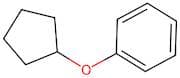
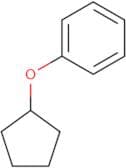
:(cyclopentyloxy)benzene
Description:
Cyclopentyloxybenzene, with the CAS number 33186-68-4, is an organic compound characterized by the presence of a cyclopentyl group attached to a phenolic structure via an ether linkage. This compound typically exhibits a clear to pale yellow liquid form at room temperature. Its molecular structure features a benzene ring substituted with a cyclopentyloxy group, which influences its physical and chemical properties, such as solubility and reactivity. Cyclopentyloxybenzene is likely to be non-polar, making it soluble in organic solvents but less so in water. The compound may participate in various chemical reactions, including nucleophilic substitutions and electrophilic aromatic substitutions, due to the presence of the aromatic ring. Additionally, its unique structure may impart specific characteristics such as moderate volatility and potential applications in organic synthesis or as an intermediate in the production of other chemical compounds. Safety data should be consulted for handling and storage, as with any chemical substance.
Formula:C11H14O
InChI:InChI=1/C11H14O/c1-2-6-10(7-3-1)12-11-8-4-5-9-11/h1-3,6-7,11H,4-5,8-9H2
SMILES:c1ccc(cc1)OC1CCCC1
Synonyms:- Benzene, (cyclopentyloxy)-
- Cyclopentyl phenyl ether
- (Cyclopentyloxy)benzene
Sort by
Purity (%)
0
100
|
0
|
50
|
90
|
95
|
100
Found 3 products.
Cyclopentyloxybenzene
CAS:Cyclopentyloxybenzene is a bidentate ligand that binds to the active site of cyclic AMP phosphodiesterase, inhibiting the enzyme's ability to break down cyclic AMP. Cyclopentyloxybenzene also has an antioxidant effect, which may be due to its ability to prevent the production of reactive oxygen species. This compound emits light when it reacts with deuterium atoms. When deuterated, cyclopentyloxybenzene does not react as quickly and has a higher yield than non-deuterated compounds. It also has transport properties that make it ideal for reactions in organic solvents. The reaction time is slower than other bidentate ligands, but the energy efficiency is greater due to the reduced activation energy required for chemical reactions.Formula:C11H14OPurity:Min. 95%Molecular weight:162.23 g/mol