CAS 3331-28-0
:Phenazine, 2-bromo-
Description:
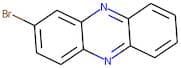
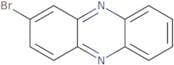
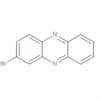
2-Bromo-phenazine is a chemical compound characterized by its structure, which includes a phenazine core with a bromine substituent at the second position. It is a member of the phenazine family, which consists of fused aromatic rings and is known for its diverse biological and chemical properties. The presence of the bromine atom introduces unique reactivity and can influence the compound's solubility, stability, and interaction with other molecules. Typically, compounds like 2-bromo-phenazine exhibit fluorescence, making them useful in various applications, including organic electronics and as dyes. Additionally, phenazine derivatives are often studied for their potential antimicrobial and anticancer activities. The compound is generally handled with care due to its potential toxicity and environmental impact. As with many halogenated compounds, it may undergo reactions such as nucleophilic substitution or electrophilic aromatic substitution, depending on the conditions. Overall, 2-bromo-phenazine is a significant compound in both synthetic and medicinal chemistry, with ongoing research into its properties and applications.
Formula:C12H7BrN2
Synonyms:- 2-Bromophenazine
Sort by
Purity (%)
0
100
|
0
|
50
|
90
|
95
|
100
Found 2 products.
2-Bromophenazine
CAS:<p>2-Bromophenazine</p>Formula:C12H7BrN2Purity:95%Color and Shape: dark beige crystalline solidMolecular weight:259.10g/mol2-Bromophenazine
CAS:<p>2-Bromophenazine is a redox agent that has been shown to be effective in electron transfer reactions. It is soluble in organic solvents and can be used as an electron donor. 2-Bromophenazine reacts with polyisoprenoid compounds to form the membrane-bound enzyme dehydrogenase, which catalyzes the reaction of electrons to produce hydrogen peroxide. This product also has fluorescence properties, which make it useful for research on proteins and membranes. 2-Bromophenazine is insoluble in water and reacts with anions such as chloride or sulfate ions to form buffers. It also reacts with isooctane, forming a molecule that can accept electrons from another molecule. The bond cleavage of this product produces reactive molecules that can initiate reactions with other functional groups, such as amino acids.</p>Purity:Min. 95%