CAS 33468-34-7
:L-6-Methyltryptophan
Description:
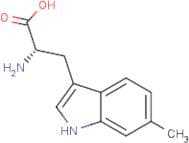
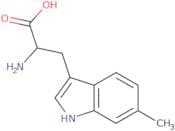
L-6-Methyltryptophan is an amino acid derivative and a structural analog of tryptophan, characterized by the presence of a methyl group at the 6-position of the indole ring. This compound is known for its role in various biochemical processes, particularly in the synthesis of proteins and neurotransmitters. It exhibits properties typical of amino acids, such as being polar and capable of forming hydrogen bonds, which influences its solubility in water and its interactions with other biomolecules. L-6-Methyltryptophan has garnered interest in research due to its potential effects on serotonin metabolism and its implications in neurobiology and pharmacology. Additionally, it may serve as a precursor for the synthesis of other bioactive compounds. The compound is typically studied in the context of its biological activity, including its influence on mood regulation and its potential therapeutic applications. As with many amino acid derivatives, its stability and reactivity can be influenced by environmental factors such as pH and temperature.
Formula:C12H14N2O2
InChI:InChI=1S/C12H14N2O2/c1-7-2-3-9-8(5-10(13)12(15)16)6-14-11(9)4-7/h2-4,6,10,14H,5,13H2,1H3,(H,15,16)/t10-/m0/s1
InChI key:InChIKey=GDMRVYIFGPMUCG-JTQLQIEISA-N
SMILES:C([C@@H](C(O)=O)N)C=1C=2C(NC1)=CC(C)=CC2
Synonyms:- Tryptophan, 6-methyl-, L-
- L-Tryptophan, 6-methyl-
- L-6-Methyltryptophan
- 6-Methyl-L-tryptophan
- (2S)-2-Amino-3-(6-methyl-1H-indol-3-yl)propanoic acid
- (S)-2-Amino-3-(6-methyl-1H-indol-3-yl)propanoic acid
Sort by
Purity (%)
0
100
|
0
|
50
|
90
|
95
|
100
Found 2 products.
6-Methyl-L-tryptophan
CAS:6-Methyl-L-tryptophanPurity:98%Color and Shape:SolidMolecular weight:218.25g/mol6-Methyl-L-tryptophan
CAS:6-Methyl-L-tryptophan is a tryptophan analog that is synthesized from 6-methyl-indole and indole-3-propionic acid. It has been shown to have hemolytic activity against certain strains of bacteria, such as Staphylococcus aureus and Escherichia coli. The biosynthesis of 6-methyl-L-tryptophan is similar to the biosynthesis of L-tryptophan, but with an extra step involving the conversion of anthranilate into indole-3-propionic acid. It also has antiviral properties and can inhibit protein synthesis in viruses. 6MELT is also used in the treatment of malaria because it inhibits the growth of Plasmodium falciparum by interfering with erythrocyte membrane function.Formula:C12H14N2O2Purity:Min. 95%Color and Shape:PowderMolecular weight:218.25 g/mol