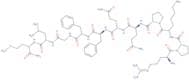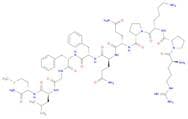
CAS 33507-63-0
:Substance P
Description:
Substance P is a neuropeptide that functions primarily as a neurotransmitter and neuromodulator in the central and peripheral nervous systems. It is composed of eleven amino acids and is part of the tachykinin family of peptides. Characteristically, Substance P is involved in the transmission of pain signals and plays a significant role in inflammatory responses, stress, and anxiety. It binds to the neurokinin-1 (NK1) receptor, which is widely distributed in the brain and other tissues, influencing various physiological processes. In addition to its role in pain perception, Substance P is implicated in the regulation of mood, anxiety, and the immune response. The peptide is typically found in high concentrations in areas of the brain associated with pain and emotional regulation. Due to its involvement in various pathophysiological conditions, Substance P has been a target for therapeutic interventions in pain management and psychiatric disorders. Its CAS number, 33507-63-0, is used for identification in chemical databases and regulatory contexts.
- 2: PN: JP2005049164 SEQID: 2 claimed protein
- 21: PN: WO0181408 SEQID: 44 claimed protein
- 36: PN: WO2007058336 SEQID: 36 claimed protein
- 44: PN: WO2005016244 PAGE: 68 claimed protein
- 690: PN: WO2004005342 PAGE: 46 claimed protein
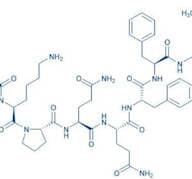
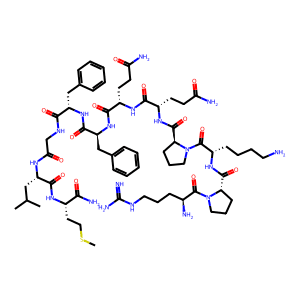
- L-Methioninamide, L-arginyl-L-prolyl-L-lysyl-L-prolyl-L-glutaminyl-L-glutaminyl-L-phenylalanyl-L-phenylalanylglycyl-L-leucyl-
- Neurokinin P
- Substance P (1-11)
- Substance P (peptide)
- Substance P (smooth-muscle stimulant)
- Substanz P
- See more synonyms
Sort by
Purity (%)
0
100
|
0
|
50
|
90
|
95
|
100
Found 9 products.
Substance P
CAS:For cellular and molecular biology applications
Formula:C63H98N18O13SColor and Shape:Lyophilized Powder, WhiteMolecular weight:1347.65Substance P
CAS:Substance P (SP), a neuropeptide discovered already in 1931, is closely related to neurokinin A. SP acts as neurotransmitter and as neuromodulator.Formula:C63H98N18O13SPurity:≥ 98%Color and Shape:White LyophilisateMolecular weight:1347.65Substance P
CAS:Substance P (Neurokinin P) (SP) is an undecapeptide (a peptide composed of a chain of 11 amino acid residues) member of the tachykinin neuropeptide family.Formula:C63H98N18O13SPurity:98% - 99.51%Color and Shape:White PowderMolecular weight:1347.63Ref: TM-TP1087
1mg54.00€5mg110.00€10mg170.00€1mL*10mM (DMSO)281.00€25mg360.00€50mg535.00€100mg765.00€2-[[2-[[2-[[2-[[2-[[5-Amino-2-[[5-amino-2-[[1-[6-amino-2-[[1-[2-amino-5-(diaminomethylideneamino)pentanoyl]pyrrolidine-2-carbonyl]am ino]hexanoyl]pyrrolidine-2-carbonyl]amino]-5-oxopentanoyl]amino]-5-oxopentanoyl]amino]-3-phenylpropanoyl]amino]-3-phenylpr
CAS:Custom research peptide; min purity 95%. For different specs please use the Peptide Quote ToolFormula:C63H98N18O13SMolecular weight:1,348.65 g/molSubstance P (Human, Bovine, Rat, Mouse)
CAS:Substance P is a member of the tachykinin neuropeptide family which is produced in the central nervous system (CNS) and acts through its specific receptor neurokinin 1 receptor (NK-1R). NK-1R is present in neurons and on glial cell types. Substance P is involved in: pain perceptions as a neurotransmitter; gut motility; increased inflammation in the lungs, gastrointestinal tract and the skin and neuroinflammation. Interestingly the levels of Substance P are raised in inflammatory bowel diseases and through its involvement in cytokine release, it contributes to asthma pathology. These diverse selection of functions makes substance P a target for therapeutic research. This product is available as a 0.5 mg vial.Formula:C63H98N18O13SPurity:Min. 95%Molecular weight:1,347.6 g/molSubstance P
CAS:Substance P is a protein that belongs to the tachykinin family of neuropeptides. It is a powerful activator of the inflammatory response, and also inhibits cell growth in cancer cells. There has been some evidence that Substance P may be useful in treating Alzheimer's disease, due to its ability to inhibit the proliferation of certain brain cells. The levels of substance P are increased in patients with Alzheimer's, and it has been hypothesized that this increase may be related to the progression of the disease.
Formula:C63H98N18O13SPurity:Min. 95%Molecular weight:1,347.63 g/mol