CAS 33543-55-4
:O-(4-Nitrophenyl)hydroxylamine
Description:
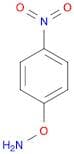
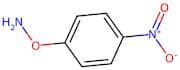
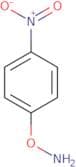
O-(4-Nitrophenyl)hydroxylamine is an organic compound characterized by the presence of a hydroxylamine functional group attached to a para-nitrophenyl moiety. Its molecular structure features a nitro group (-NO2) positioned at the para position relative to the hydroxylamine group (-NH2OH), which contributes to its chemical reactivity and properties. This compound is typically a yellow crystalline solid, reflecting the presence of the nitro group, which can influence its electronic properties and solubility. O-(4-Nitrophenyl)hydroxylamine is known for its applications in organic synthesis, particularly in the preparation of various derivatives and as a reagent in analytical chemistry. It can participate in nucleophilic substitution reactions and is often used in the detection of carbonyl compounds through derivatization. Additionally, due to its nitro group, it may exhibit some degree of biological activity, making it of interest in medicinal chemistry. Proper handling and storage are essential, as with many nitro compounds, due to potential hazards associated with their reactivity and toxicity.
Formula:C6H6N2O3
InChI:InChI=1S/C6H6N2O3/c7-11-6-3-1-5(2-4-6)8(9)10/h1-4H,7H2
InChI key:InChIKey=OOHKBWPOLBTKMR-UHFFFAOYSA-N
SMILES:N(=O)(=O)C1=CC=C(ON)C=C1
Synonyms:- 1-(Aminooxy)-4-nitrobenzene
- Hydroxylamine, O-(p-nitrophenyl)-
- O-(p-Nitrophenyl)hydroxylamine
- hydroxylamine, O-(4-nitrophenyl)-
- p-Nitrophenoxyamine
- O-(4-Nitrophenyl)hydroxylamine
- O-(4-Nitrophenyl)hydroxylamine
Sort by
Purity (%)
0
100
|
0
|
50
|
90
|
95
|
100
Found 4 products.
O-(4-Nitrophenyl)hydroxylamine
CAS:O-(4-Nitrophenyl)hydroxylaminePurity:98%Molecular weight:154.12g/molO-(4-Nitrophenyl)hydroxylamine
CAS:O-(4-Nitrophenyl)hydroxylamine (OPH) is an enantioselective, catalytic, and thermal stable reagent for the synthesis of chiral methyl groups. OPH can be used as a nucleophile to convert electron-deficient alkenes into α-chloroalkenes. It also reacts with nitroarenes to give nitroalkenes in high yields. OPH has been shown to be effective in the asymmetric hydrolysis of esters and amides through its ability to oxidize the methyl group on the substrate. This reaction does not occur with other groups such as hydroxyl or hydrogen atoms. Methyl groups are important for many biological molecules, including proteins and nucleic acids, which form the backbone of cells that make up living organisms. The OPH reaction is catalyzed by enzymes called methyltransferases, which transfer one atom of methyl from S-adenosylmethionine (SAM)Formula:C6H6N2O3Purity:Min. 95%Color and Shape:PowderMolecular weight:154.12 g/mol