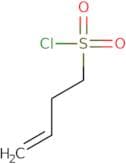
CAS 33994-36-4
:3-Butene-1-sulfonyl chloride
Description:
3-Butene-1-sulfonyl chloride, with the CAS number 33994-36-4, is an organosulfur compound characterized by the presence of a sulfonyl chloride functional group attached to a butene backbone. This compound typically appears as a colorless to pale yellow liquid and is known for its reactivity, particularly due to the sulfonyl chloride group, which can participate in nucleophilic substitution reactions. It is soluble in organic solvents such as dichloromethane and ether but is generally not soluble in water. The compound is used in organic synthesis, particularly in the preparation of sulfonamides and other sulfonyl derivatives. Due to the presence of the sulfonyl chloride group, it can be corrosive and should be handled with care, using appropriate safety measures to avoid skin and eye contact. Additionally, it may release toxic gases upon decomposition, necessitating proper storage and disposal protocols. Overall, 3-butene-1-sulfonyl chloride is a valuable reagent in synthetic organic chemistry, particularly in the development of pharmaceuticals and agrochemicals.
Formula:C4H7ClO2S
Sort by
Purity (%)
0
100
|
0
|
50
|
90
|
95
|
100
Found 1 products.
3-Butene-1-sulfonyl Chloride
CAS:<p>3-Butene-1-sulfonyl chloride is a reagent that is used in the synthesis of organic compounds. It is a functional group that yields metathesis reactions, which are used in chemistry and biology. 3-Butene-1-sulfonyl chloride can be used as an inhibitor to stop the activity of thrombin, which plays an important role in blood coagulation. This compound has also been shown to have potential against cancer cells and other diseases because it has been synthesized with a spacer and linker to create a cyclic biomolecular that inhibits protein synthesis by binding to ribosomes. The metathesis reaction occurs when two different molecules are mixed together and react with each other through the formation of new bonds. The spacer is a synthetic molecule that separates the linker from the functional group on one side of the molecule, while the linker connects to another functional group on the other side of the molecule. Cyclisation refers to</p>Formula:C4H7ClO2SPurity:Min. 95%Molecular weight:154.62 g/mol