![1-O-[4-(dipropylsulfamoyl)benzoyl]-beta-D-glucopyranuronic acid](/_next/image/?url=https%3A%2Fstatic.cymitquimica.com%2Fcas-image%2Fthumb-webp%2F391641-1-o-4-dipropylsulfamoyl-benzoyl-beta-d-glucopyranuronic-acid.webp&w=3840&q=75)
CAS 34017-15-7
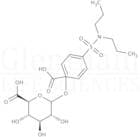
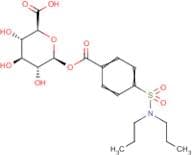
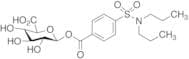
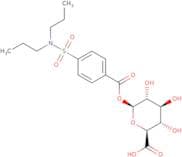
:1-O-[4-(dipropylsulfamoyl)benzoyl]-beta-D-glucopyranuronic acid
Probenecid Acyl beta-D-Glucuronide >90%
CAS:Controlled ProductStability Hygroscopic
Applications The major metabolite of Probenecid (P755000).
References Blanckaert, N., et al.: Biochem. J., 171, 203 (1978), Worrall, S., et al.: Life Sci., 56, 1921 (1995), Presle, N., et al.: Drug Metab. Disos., 24, 1050 (1996), Akira, K., et al.: J. Pharmacol. Toxicol. Methods, 37, 237 (1997), Terrier, N., et al.: Mol. Pharmacol., 56, 226 (1999),Formula:C19H27NO10SPurity:>90%Color and Shape:NeatMolecular weight:461.48Probenecid acyl b-D-glucuronide
CAS:Probenecid is a weak acid that is rapidly converted to an active metabolite in the body. It is used as an analgesic, antipyretic, and anti-inflammatory drug. Probenecid has been shown to inhibit the formation of biliary acids in animals and humans and has been used in the treatment of chronic inflammatory conditions such as rheumatoid arthritis. The most common route of administration for this drug is orally, although it can also be given intravenously or intramuscularly. Probenecid also acts as a nonsteroidal anti-inflammatory drug (NSAID). This means that it inhibits prostaglandin synthesis by blocking cyclooxygenase enzymes. This reduces inflammation, pain, and fever by inhibiting the production of prostaglandins that play a role in these processes.
Formula:C19H27NO10SPurity:Min. 95%Color and Shape:White To Off-White SolidMolecular weight:461.48 g/mol