CAS 34296-51-0
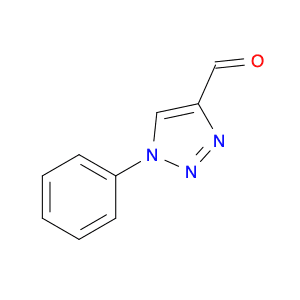
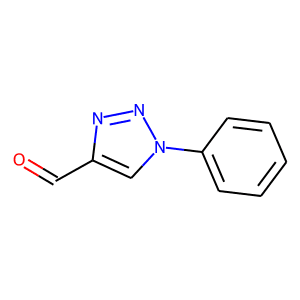
:1-phenyl-1H-1,2,3-triazole-4-carbaldehyde
Description:
1-Phenyl-1H-1,2,3-triazole-4-carbaldehyde is an organic compound characterized by its triazole ring, which is a five-membered heterocyclic structure containing three nitrogen atoms. This compound features a phenyl group attached to the triazole, enhancing its aromatic properties and potentially influencing its reactivity and solubility. The presence of the aldehyde functional group (-CHO) at the 4-position of the triazole ring contributes to its reactivity, making it a useful intermediate in organic synthesis and medicinal chemistry. The compound is typically a solid at room temperature and may exhibit moderate solubility in polar organic solvents. Its unique structure allows for various applications, including in the development of pharmaceuticals, agrochemicals, and as a building block for more complex molecules. Additionally, the triazole moiety is known for its biological activity, which can include antifungal and antimicrobial properties. As with many organic compounds, handling should be done with care, considering potential toxicity and reactivity.
Formula:C9H7N3O
InChI:InChI=1/C9H7N3O/c13-7-8-6-12(11-10-8)9-4-2-1-3-5-9/h1-7H
SMILES:c1ccc(cc1)n1cc(C=O)nn1
Sort by
Purity (%)
0
100
|
0
|
50
|
90
|
95
|
100
Found 3 products.
1-Phenyl-1H-1,2,3-triazole-4-carbaldehyde
CAS:Formula:C9H7N3OPurity:%Color and Shape:SolidMolecular weight:173.17141-Phenyl-1H-1,2,3-triazole-4-carbaldehyde
CAS:1-Phenyl-1H-1,2,3-triazole-4-carbaldehydePurity:95%Color and Shape:SolidMolecular weight:173.17g/mol1-Phenyl-1H-1,2,3-triazole-4-carbaldehyde
CAS:<p>1-Phenyl-1H-1,2,3-triazole-4-carbaldehyde (phenyltriazole) is a heterocyclic compound that has been synthesized as a potential drug for the treatment of malaria. The equilibrium between the two isomers is controlled by the rate of thermal isomerization. The dimethyl sulfoxide and nitrile functional groups are responsible for this process. Phenyltriazole has been shown to have antiplasmodial activity in vitro against parasites resistant to chloroquine and pyrimethamine, as well as in vivo against chloroquine resistant strains. This molecule also inhibits growth of Mycobacterium tuberculosis in cell culture and has been shown to be effective against other bacterial strains that are resistant to standard antibiotics. Phenyltriazole binds to DNA gyrase, an enzyme involved in DNA replication and repair, which results in inhibition of RNA synthesis and protein synthesis, leading</p>Formula:C9H7N3OPurity:Min. 95%Molecular weight:173.17 g/mol