CAS 34298-84-5
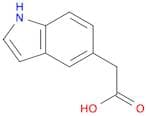
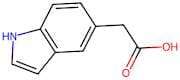
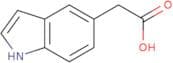
:1H-indol-5-ylacetic acid
Description:
1H-Indol-5-ylacetic acid, also known as indole-3-acetic acid (IAA), is a naturally occurring plant hormone belonging to the auxin class. It plays a crucial role in regulating various physiological processes in plants, including cell elongation, root formation, and response to light and gravity. The compound features an indole ring structure, which is a bicyclic structure composed of a six-membered benzene ring fused to a five-membered nitrogen-containing pyrrole ring. Its carboxylic acid functional group contributes to its acidic properties and biological activity. 1H-Indol-5-ylacetic acid is soluble in polar solvents, such as water and alcohol, and exhibits a relatively low molecular weight. In addition to its role in plant growth and development, it has been studied for its potential applications in agriculture and horticulture, as well as its effects on human health, particularly in the context of cancer research. Overall, this compound is significant in both plant biology and potential therapeutic contexts.
Formula:C10H9NO2
InChI:InChI=1/C10H9NO2/c12-10(13)6-7-1-2-9-8(5-7)3-4-11-9/h1-5,11H,6H2,(H,12,13)
SMILES:c1cc2c(cc[nH]2)cc1CC(=O)O
Synonyms:- 1H-indole-5-acetic acid
- 2-(1H-indol-5-yl)acetic acid
- 1H-Indol-5-ylacetic acid
Sort by
Purity (%)
0
100
|
0
|
50
|
90
|
95
|
100
Found 4 products.
2-(1H-Indol-5-yl)acetic acid
CAS:Formula:C10H9NO2Purity:98%Color and Shape:SolidMolecular weight:175.18402-(1H-Indol-5-yl)acetic acid
CAS:2-(1H-Indol-5-yl)acetic acid is a lipogenic agent that is used in the treatment of cancer. It binds to nuclear hormone receptors, which regulate lipid biosynthesis. 2-(1H-Indol-5-yl)acetic acid has been shown to inhibit the growth of human bladder cancer cells and increase the uptake of fatty acids by these cells. This agent also has anti-inflammatory properties and causes an increase in reactive oxygen species in microglia, which are immune system cells found in the brain. 2-(1H-Indol-5-yl)acetic acid has been shown to have cytotoxic effects on mammalian cells, but not on bacteria or yeast. 2-(1H-Indol-5-yl)acetic acid may be administered intravenously or intraperitoneally.
Formula:C10H9NO2Purity:Min. 95%Molecular weight:175.18 g/mol