CAS 34322-45-7
:Pyridine-15N
Pyridine-15N
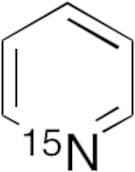
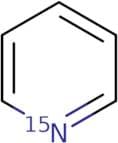
CAS:Controlled ProductApplications Pyridine-15N, is the labeled analogue of Pyridine (P991280), a basic six-membered heterocyclic ring. Pyridine is a base structure present in many biologically active compounds like the vitamins niacin and pyridoxal. Pyridine is used in dehalogenation reactions and can be used as a base in condensation reactions.
References Egyed, J. et al.: Bull. Soc. Chim. Fra., 11, 3014 (1973); Li, Y. et al.: Wuli HUa. Xueb., 14, 1048 (1998);Formula:C5H515NColor and Shape:NeatMolecular weight:80.09Pyridine-15N
CAS:Controlled ProductPyridine-15N is a chemical compound that has been shown to be a promising candidate for molecular hydrogen storage. It is believed that the pyridine ring of Pyridine-15N interacts with the proton, forming a pyridinium ion. This interaction may be due to the increased temperatures and simulations used in this study, as well as the magnetic resonance spectroscopy techniques. The reaction selectivity of Pyridine-15N was found to depend on its acid moieties and the mesoporous nature of silicon. The hydrogen bond between these two compounds also contributed to its stability and reactivity.
Formula:C5H5NPurity:Min. 95%Molecular weight:79.1 g/mol