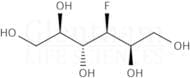
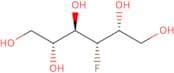
CAS 34339-82-7
:3-fluoro-3-deoxy-D-glucitol
Description:
3-Fluoro-3-deoxy-D-glucitol, with the CAS number 34339-82-7, is a synthetic analog of glucose where the hydroxyl group at the third carbon is replaced by a fluorine atom. This modification imparts unique properties to the molecule, influencing its biological activity and interaction with enzymes and transporters. The compound is typically a white crystalline solid and is soluble in water, reflecting its sugar-like structure. Its fluorinated nature may enhance its stability and alter its metabolic pathways compared to natural glucose. 3-Fluoro-3-deoxy-D-glucitol is of interest in biochemical research, particularly in studies related to glucose metabolism and the development of potential therapeutic agents for conditions such as diabetes. The presence of the fluorine atom can also affect the compound's binding affinity to various biological targets, making it a valuable tool in drug design and development. Overall, this compound exemplifies how small structural changes can lead to significant variations in chemical behavior and biological function.
Formula:C6H11FO5
InChI:InChI=1/C6H11FO5/c7-5(3(10)1-8)6(12)4(11)2-9/h4-6,8-9,11-12H,1-2H2/t4-,5+,6+/m1/s1
Synonyms:- 3-Deoxy-3-fluorosorbitol
- 3-Deoxy-3-fluoro-D-glucitol
- D-Glucitol, 3-deoxy-3-fluoro-
- (3R,4S,5R)-3-fluoro-1,4,5,6-tetrahydroxy-hexan-2-one
Sort by
Purity (%)
0
100
|
0
|
50
|
90
|
95
|
100
Found 2 products.
3-Deoxy-3-fluoro-D-glucitol
CAS:3-Deoxy-3-fluoro-D-glucitol is a glucose analog that is used as a marker for glycogen in tissue extracts. 3-Deoxy-3-fluoro-D-glucitol has been shown to be the most sensitive molecular marker for muscle glycogen concentrations, although it does not react with all types of muscle. It can also be used as a marker for glycogen content in extracts of tissue or cells because it reacts with locusta migratoria fat body. In addition, 3-deoxy-3-fluoro-D-glucitol can be used as a nuclear magnetic resonance (NMR) probe to study the structure of trehalose and fructose. The compound has been shown to bind to locusta migratoria fat body and can be used as an NMR probe to study the structure of trehalose and fructose.Formula:C6H13FO5Purity:Min. 95%Molecular weight:184.16 g/mol